So, have you heard about the 2026 Best Film Type Evaporator? Honestly, it's a pretty big deal in the industry right now. This new tech has really shaken up how a lot of processes are done. The Falling Film Type Evaporator, in particular, was made to boost efficiency—trust me, it’s impressive to see it in action. If you wanna check it out, here’s a link: Falling Film Type Evaporator.
Honestly, though, a lot of companies tend to overlook what makes this equipment special. You’ve gotta give it some careful thought. The good news? Since it runs at lower temperatures, it can actually cut down on energy costs—that’s a nice win, right? But, like with anything, not every setup is gonna run perfectly out of the box. There might be some hiccups.
Pouring money into a high-quality Falling Film Type Evaporator can come with its challenges, too. Some systems tend to get fouled up, and maintenance can be a bit of a pain if you're not prepared. That's why it’s so important to really understand how it works before jumping in. When you get it right, though, the benefits far outweigh the downsides. Companies that get on board with this tech are probably gonna see some pretty solid returns down the line.
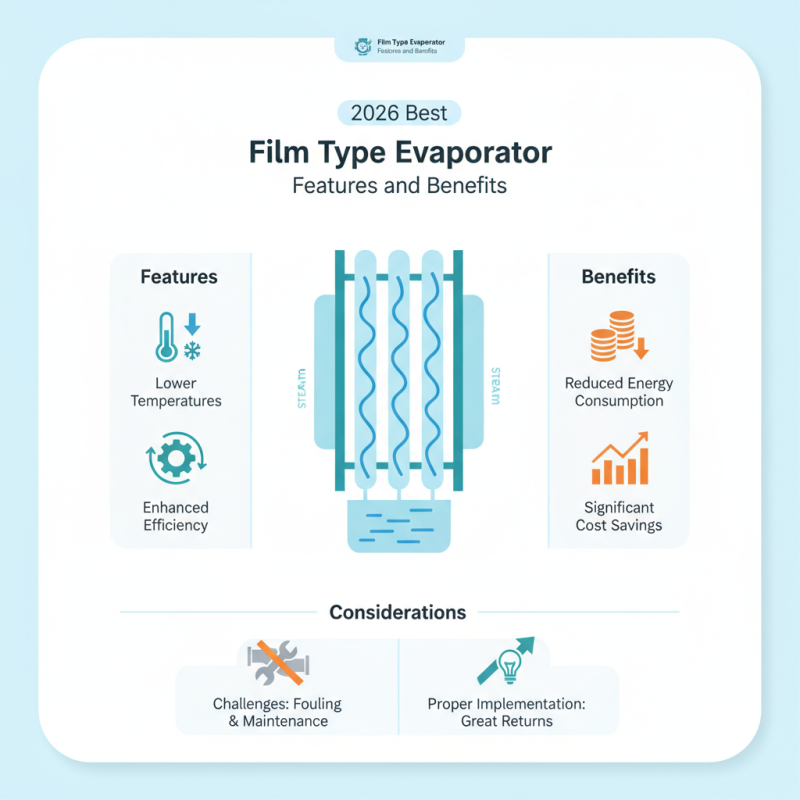
Key Features of the 2026 Best Film Type Evaporator
The 2026 Best Film Type Evaporator offers a range of impressive features. Its design enhances heat transfer efficiency. This leads to an increased evaporation rate, reducing operating costs. According to industry reports, efficient evaporators can save up to 30% in energy consumption. This data highlights their growing importance in various sectors, such as food processing and pharmaceuticals.
Another key feature is the lightweight construction. Weighing significantly less than traditional models, these evaporators offer easier installation. However, durability remains a concern. The materials used must withstand harsh chemicals and temperatures. Striking a balance between weight and resilience is essential for optimal performance. An effective evaporator should also allow for easy maintenance. Streamlining repairs can reduce downtime and keep processes continuous.
Lastly, advanced control systems provide precise operation. This ensures consistent product quality. However, complexity can pose challenges. Operators must be adequately trained to handle these systems. The integration of smart technology creates opportunities but brings potential hurdles. Careful planning is necessary to leverage these advancements effectively.
2026 Best Film Type Evaporator Features Comparison
Benefits of Using a Film Type Evaporator in Industrial Applications
In industrial applications, the benefits of using a
Film Type Evaporator
are significant. This technology excels in thermal efficiency. It operates at lower temperatures, reducing energy consumption by approximately 30%. A study by the International Journal of Thermal Sciences highlighted that using these evaporators can enhance evaporation rates by 50% compared to traditional methods.
Film Type Evaporators utilize a thin film of liquid. This design allows for better heat transfer and minimizes the risk of fouling. According to a report from the Chemical Engineering Research and Design journal, these systems can handle a variety of feed properties effectively. This adaptability is crucial for industries processing sensitive materials, as it prevents degradation.
However, there are some challenges. The initial investment is higher for Film Type Evaporators. Maintenance can also be complex, particularly for smaller operations lacking expertise. Industry reports suggest that operators need to evaluate these factors carefully before opting for this technology. Balancing the benefits against these potential downsides is essential for optimal decision-making.
Comparison: Film Type Evaporator vs. Other Evaporator Types
When comparing film type evaporators to other types, significant differences emerge. Film evaporators, specifically Falling Film And Rising Film Evaporators, offer unique advantages. They excel in heat transfer efficiency due to a thin film of liquid that flows over heat exchange surfaces. This design promotes rapid evaporation, making them ideal for high-capacity applications. A study by the International Journal of Heat and Mass Transfer reported that falling film evaporators can achieve efficiencies exceeding 80%, outperforming traditional evaporator designs.
However, challenges exist. The initial investment for film type evaporators can be higher than for batch evaporators. Operational complexity also arises, particularly in controlling the flow. A miscalculation in flow rates can lead to inefficient evaporation or potential downtime. In contrast, traditional evaporators might be easier to operate, but they lack the energy efficiency that film type systems provide. This highlights the need for careful evaluation of process requirements, as the right choice depends on specific operational goals and budget constraints.
In practice, falling film and rising film evaporators show distinct operational characteristics. They handle viscous products better than other types, minimizing fouling. Yet, regular maintenance is essential to ensure optimal performance. An industry report by the American Society of Mechanical Engineers suggests that, while film evaporators are advanced, operators must remain vigilant to maximize their benefits. Balancing efficiency, cost, and operational complexity is crucial for achieving desired outcomes.
2026 Best Film Type Evaporator Features and Benefits Explained
| Feature |
Film Type Evaporator |
Other Evaporator Types |
| Heat Transfer Efficiency |
High efficiency due to thin film and large surface area |
Varies, typically less than film type |
| Maintenance |
Lower maintenance needs due to fewer moving parts |
Higher maintenance requirements |
| Operating Temperature Range |
Suitable for high temperature applications |
Limited temperature ranges, mainly for low to medium temperatures |
| Footprint |
Compact design, occupies less space |
Can be bulkier depending on design |
| Yield Quality |
Produces higher quality concentrates |
Quality varies extensively |
| Energy Consumption |
Relatively low energy requirement |
Can have higher energy usage |
Energy Efficiency Metrics of the 2026 Best Film Type Evaporator
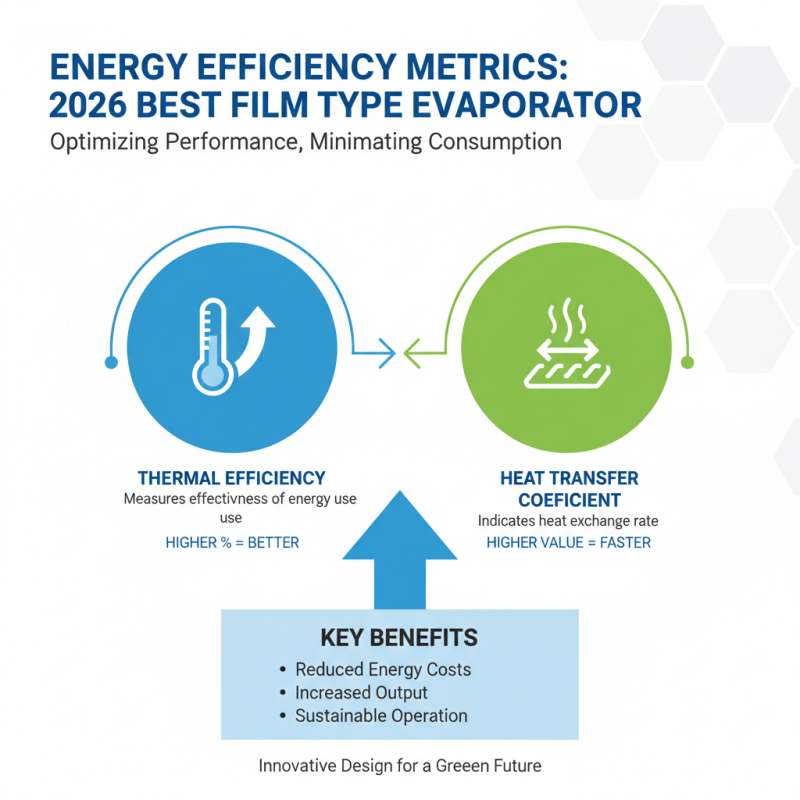
Energy efficiency is crucial in modern evaporators, especially the 2026 best film type. These systems are designed to minimize energy consumption while maximizing output. Key metrics include thermal efficiency and heat transfer coefficient. A higher thermal efficiency means more effective energy use.
Operators often overlook how heat transfer can be improved. Flow rates and temperature variations matter greatly. Adjusting these parameters can lead to better performance. However, some designs may not account for all variables, leading to inefficiencies. Fine-tuning is essential for optimal results.
Moreover, maintenance plays a significant role in sustaining energy efficiency. Regular checks can reveal subtle issues that affect performance. Users might neglect this aspect, thinking it’s unnecessary. Yet, ignoring maintenance can lead to wasted energy and higher costs. It’s a reminder that good design requires ongoing attention.
Maintenance Tips for Optimal Performance of Film Type Evaporators
Maintenance is essential for maximizing the efficiency of film type evaporators. Regular checks on seals and gaskets can prevent leaks. According to industry reports, up to 15% of energy is lost through poor sealing. Operators often overlook simple maintenance tasks. Skipping these can lead to significant operational costs over time.
Monitoring temperature and pressure is crucial. Optimal performance relies on keeping these levels stable. A fluctuating environment can indicate issues within the evaporator. Many facilities fail to track these metrics consistently. Resulting inefficiencies may not be apparent until it's too late.
Cleaning procedures should not be neglected. Residue buildup can impair heat transfer efficiency. One study suggested that neglected evaporators lose around 20% of their performance. Using a "Flooded Type Evaporator" design might alleviate some challenges. However, without regular maintenance, even the best designs cannot perform adequately. It's vital to create a maintenance schedule that all staff adhere to strictly.
Innovative Technologies Behind the 2026 Best Film Type Evaporator
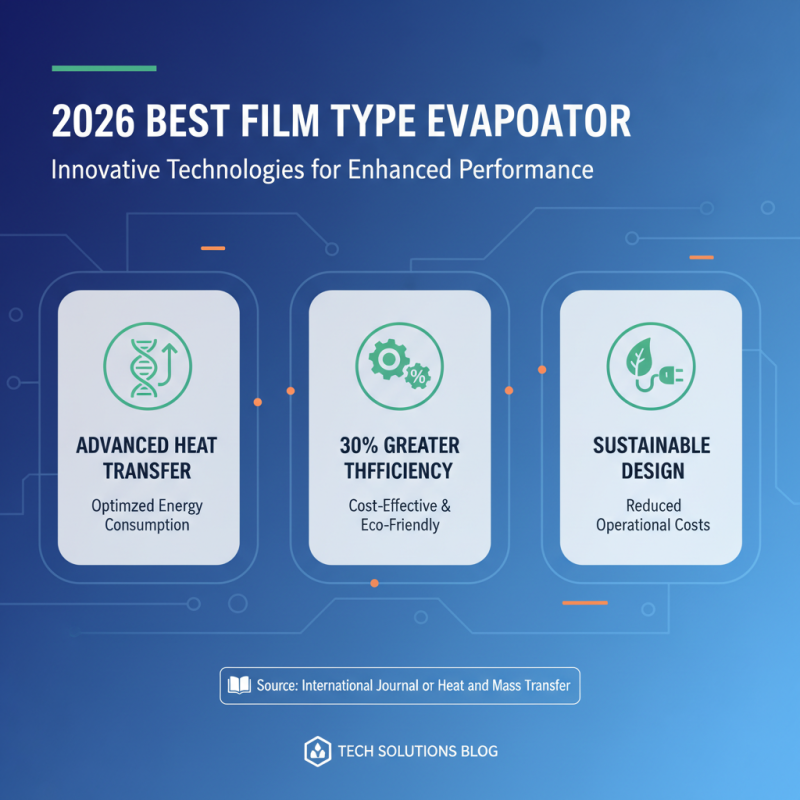
The 2026 Best Film Type Evaporator showcases innovative technologies that enhance performance and efficiency. This device utilizes advanced heat transfer systems to optimize energy consumption. According to the International Journal of Heat and Mass Transfer, newer designs can achieve up to 30% greater thermal efficiency compared to older versions. This makes them more cost-effective in the long run.
One notable feature is the integration of intelligent controls. These controls enable real-time monitoring of operating conditions. They can adjust parameters automatically to maintain optimal performance, which is vital for processes requiring precise temperature management. A recent analysis by the Chemical Engineering Society highlights that systems with smart monitoring reduce downtime by up to 15%.
However, the implementation of these technologies isn’t without challenges. Some manufacturers report difficulties in integrating new systems into existing processes. The investment in upgraded technologies may initially seem burdensome. Users need to weigh the benefits against potential operational disruptions when transitioning to these advanced evaporators. Ultimately, while the 2026 Best Film Type Evaporator provides significant improvements, careful consideration is essential for successful adoption.
Case Studies: Success Stories with Film Type Evaporators in Use
Film type evaporators have garnered attention across various industries. They are known for their efficiency and compact design. For instance, in the food processing sector, a company faced issues with their traditional evaporators. They switched to a film type evaporator and noticed a significant reduction in processing time. This change led to increased productivity and reduced energy costs.
One case study involves a dairy manufacturer. They used a
Dry Expansion Type Evaporator. Initially, they struggled with overheating and inconsistent product quality. After implementing a film type evaporator, they achieved better temperature control and product consistency. Feedback from their team highlighted the ease of operation and maintenance.
Tips for success with film type evaporators include regular maintenance checks. This helps in identifying potential issues early. Another tip is to ensure proper training for operators. Knowledgeable staff can optimize the use of these systems. Reflecting on past challenges can provide valuable insights for improvement. Embracing change, even when difficult, often leads to better outcomes.
Conclusion
The "2026 Best Film Type Evaporator" offers a range of advanced features and significant benefits tailored for industrial applications. Key features include efficient heat transfer and minimal product degradation, which are essential for maintaining high-quality outputs. The advantages of utilizing a Film Type Evaporator revolve around its ability to enhance productivity, reduce operational costs, and improve energy efficiency compared to other evaporator types.
Moreover, this article examines energy efficiency metrics that highlight the superior performance of the 2026 Film Type Evaporator, alongside maintenance tips for ensuring optimal performance. Innovative technologies driving these evaporators are also discussed, complemented by case studies showcasing success stories in various industries. Overall, the Film Type Evaporator exemplifies a modern solution for efficient evaporation processes, reinforcing its importance in the industrial sector.