Hey, have you noticed how fast the market for Rising Film Evaporators is changing? I recently came across a report from Global Market Insights — it says the whole global evaporator market is expected to hit around $5.5 billion by 2026. That’s pretty wild! It just shows how much everyone is craving efficient manufacturing solutions these days. Experts like Dr. James Altman, who’s pretty much a big deal in thermal separation tech, emphasize this point too. He mentioned that designing Rising Film Evaporators smartly can really boost how efficiently companies produce stuff.
If you’re in the industry, you know these evaporators are pretty much a must-have if you're after high-performance, reliable results. But here’s the thing — it’s crucial to find the right partners. So, companies should definitely look into top OEM and ODM manufacturers to find trustworthy collaborations. Sure, there are some cool innovations happening, but you gotta be careful. Not every company that claims to offer top efficiency actually performs well under different conditions.
And honestly, having the highest production capacity isn’t everything. The real deal is working with a manufacturer who cares about quality and consistency. As the industry keeps growing and evolving, manufacturers need to constantly review their tech and processes. Striking that balance between efficiency and quality is really the key to staying successful long-term in the world of Falling Film And Rising Film Evaporators.
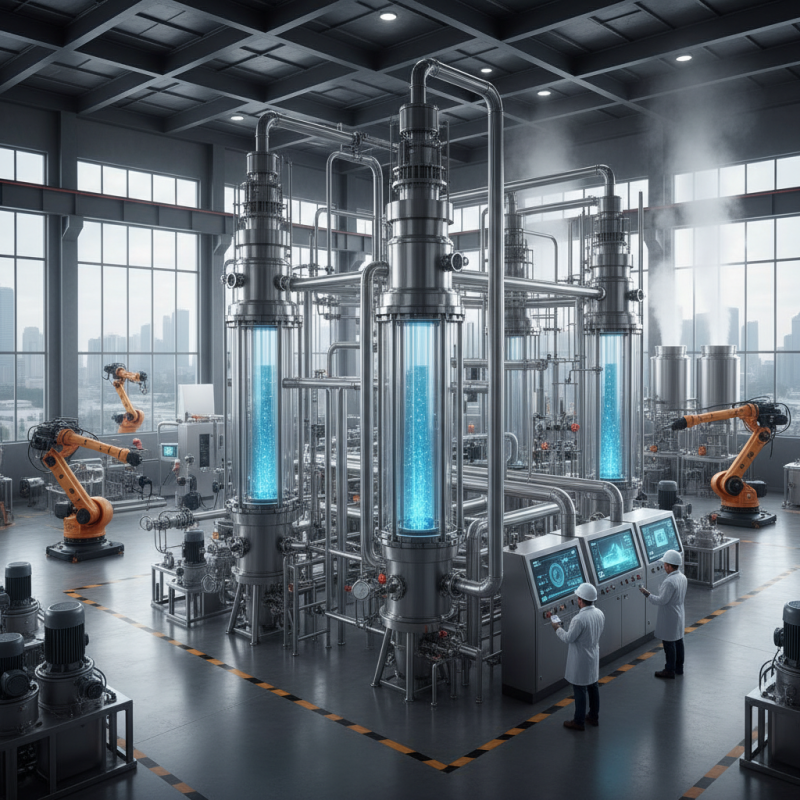
The OEM ODM Rising Film Evaporator market is witnessing significant growth. Industry reports indicate that by 2026, the global market is expected to reach approximately $1.2 billion. This growth reflects an increasing demand for efficient thermal separation processes across various industries. As companies strive for sustainability, Rising Film Evaporators present an innovative solution that aligns with eco-friendly practices.
In recent years, manufacturers have enhanced their technologies, leading to better energy efficiency. A study found that rising film technology can improve energy savings by up to 30%. This technology minimizes fouling and enhances heat transfer, making it a preferred choice for many applications. However, manufacturers must address challenges. High initial costs and complex maintenance needs can deter potential customers. Continuous innovation is essential to overcome these barriers.
The competitive landscape for Rising Film Evaporators is evolving. New factories are emerging, focusing on custom solutions. Not all manufacturers can provide consistent quality or service. Companies need to assess factors like reliability and support when choosing suppliers. Industry analysts emphasize the importance of due diligence in selecting the right partner in this dynamic market.
The demand for rising film evaporators in industrial applications is strongly influenced by several factors. Key among them is the increasing need for energy-efficient processes. Industries such as food and beverage, pharmaceuticals, and chemical manufacturing are pushing for greater efficiency to reduce operational costs. According to a report from Markets and Markets, the global evaporator market is expected to reach $5.6 billion by 2026, with rising film evaporators playing a significant role in this growth.
Rising Film Evaporator Working mechanisms offer distinct advantages over traditional methods. They excel in heat transfer efficiency and can operate at lower temperatures. This is particularly beneficial in sensitive applications where product quality is paramount. A study from Research and Markets indicates that the global demand for advanced evaporators is projected to grow by 6% annually, highlighting their importance in modernization efforts across various sectors.
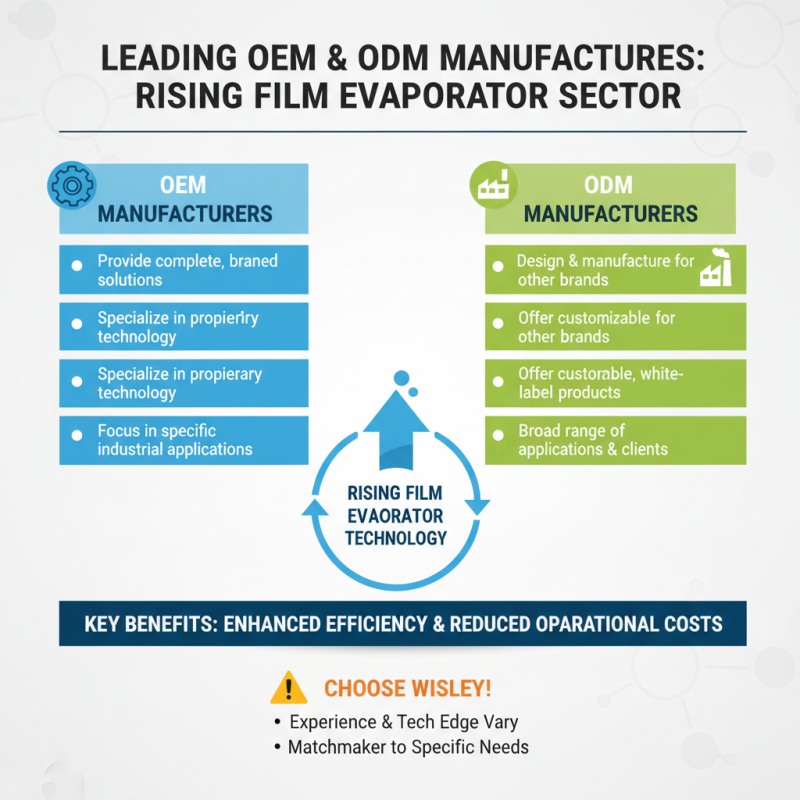
When exploring the rising film evaporator sector, identifying leading OEM and ODM manufacturers is crucial. These companies provide advanced solutions for various industrial applications. Their technologies often enhance efficiency and reduce operational costs. However, not all manufacturers are created equal. Some may lack the experience or technological edge to meet specific needs.
Tips: Research each manufacturer's history. A long-standing company may offer reliability, but newer firms can introduce innovative solutions. Balance is key.
It’s also important to consider customer support services. Responsive and informed assistance can greatly influence your experience. Some manufacturers excel in providing tailored solutions, while others struggle with communication. A thorough review of customer feedback can help gauge this aspect.
Tips: Check online reviews and ratings. They often reveal the true efficiency of support teams and product quality. Engaging with existing clients can provide additional insights into potential challenges.
The rising film evaporator technology has seen significant advances recently. These innovations focus on improving energy efficiency and reducing operational costs. By utilizing advanced heat transfer mechanisms, manufacturers can enhance the evaporation process. This is vital for industries requiring high-quality separation and concentration of solutions.
Tips: Consider energy recovery systems. They can dramatically improve efficiency. Additionally, automated controls can optimize the evaporation rate. These innovations lend flexibility to the process, allowing for adjustments in real-time. Ensuring consistent product quality is essential in competitive markets.
Design improvements in Rising Falling Film Evaporators also matter. Enhanced materials bring stronger resistance to corrosion and wear. This leads to a longer lifespan and reduced maintenance costs. However, one must reflect on the trade-offs. More advanced systems can be costly to implement initially. Industries need to evaluate their specific needs carefully.
The rising film evaporator industry has seen significant growth in recent years. A multitude of OEM and ODM players are now vying for market share. Certain manufacturers are emerging as leaders, thanks to their innovative designs and efficient processes. These players employ advanced technology to enhance performance and reduce energy consumption. Their commitment to quality and sustainability has earned them a loyal customer base.
However, not all manufacturers are equally reliable. Some lack the expertise and experience needed to meet industry standards. Challenges remain in ensuring consistent product quality. It’s crucial for companies to evaluate the capabilities of potential partners carefully. Factors such as production capacity, technology, and flexibility in design play key roles in selecting a factory. Relying solely on price can lead to disappointing outcomes. Companies must consider the long-term benefits of investing in a reputable manufacturer.
As the market evolves, understanding these dynamics is essential. Conducting thorough research can illuminate the strengths and weaknesses of various players. Industry professionals should prioritize expertise and track records over superficial metrics. Exploring customer reviews and case studies can provide valuable insights. This due diligence will ultimately lead to more informed decisions in the rapidly changing landscape of the rising film evaporator market.
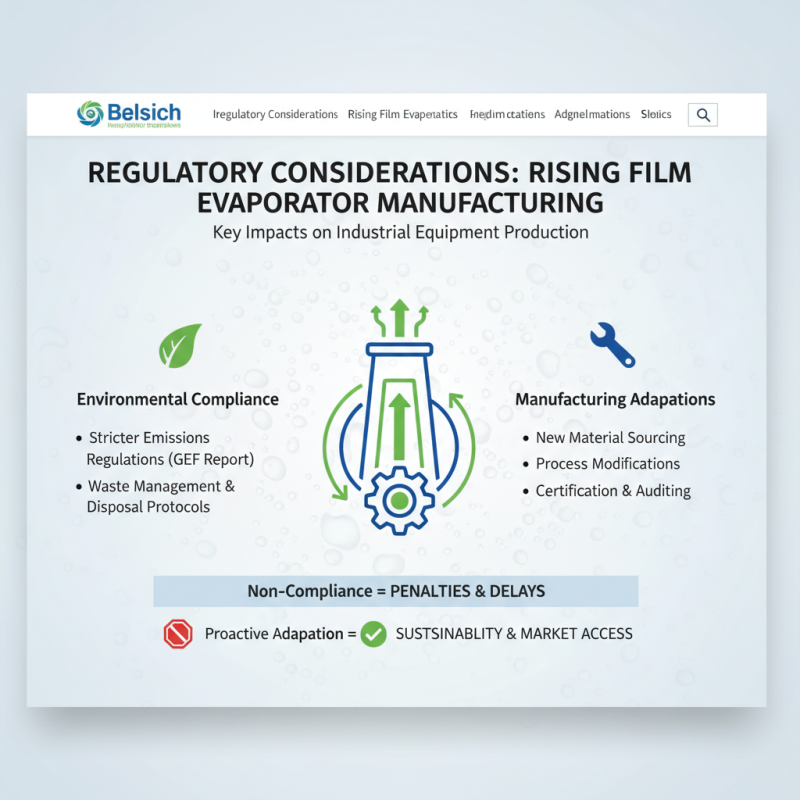
Regulatory considerations significantly influence the manufacturing of rising film evaporators. Compliance with environmental standards is crucial. For instance, the Global Environment Facility reports stricter emissions regulations impacting industrial equipment. Manufacturers must adapt to new protocols or face penalties.
Operational efficiency also aligns with regulations. The average energy consumption for evaporators has been reduced by 15% in the past three years due to innovation and regulatory pressures. This emphasizes the need for factories to invest in R&D to remain competitive and compliant.
Tips: Always stay updated with local and global regulations. Regular training for staff can ensure adherence. Collaborating with regulatory bodies may also provide insights into future standards. Consider the cost of non-compliance, which can outweigh the investment in sustainable practices. Balancing regulatory requirements with manufacturing processes can lead to improved product quality and market viability.
The demand for Rising Film Evaporators continues to grow across various sectors. According to a recent industry report, the global market for evaporators is expected to reach $5 billion by 2026. This surge is driven by the food, pharmaceutical, and chemical industries. Businesses in these sectors seek efficient and sustainable solutions to enhance production.
In particular, the food industry shows a promising outlook. The increased focus on juice and dairy processing demands advanced evaporation technologies. Rising And Falling Film Evaporators allow for lower energy consumption, making them appealing. Furthermore, pharmaceutical manufacturers are now prioritizing equipment that can handle high-viscosity materials. This trend suggests that companies must adapt quickly to meet changing requirements.
However, challenges exist. Some factory systems can be costly to implement and maintain. Companies may also struggle with operational training and process optimization. Reports indicate that up to 30% of firms face difficulties scaling production. Therefore, investment in skilled workforce development becomes crucial. Balancing cost efficiency with performance remains a key area for improvement in the industry.
In the quest for optimizing thermal efficiency in industrial and commercial refrigeration systems, the use of dry expansion evaporators has emerged as a key solution. According to recent industry reports, these evaporators are lauded for their efficient refrigerant control and rapid heat transfer capabilities. This performance not only enhances cooling efficacy but also contributes to significant energy savings. For instance, a study by the International Institute of Refrigeration indicates that the implementation of dry expansion technology can reduce energy consumption by up to 30%, highlighting its potential to improve both operational efficiency and sustainability.
Moreover, dry expansion evaporators offer reliable cooling performance, making them a preferred choice in environments where maintaining stable temperatures is critical. Their design allows for more responsive adjustments to load variations, which is essential for applications ranging from food storage to climate control in manufacturing facilities. Industry data reveals that facilities utilizing advanced evaporator designs report an average decrease in energy costs by approximately 15%, further emphasizing the financial benefits alongside operational improvements.
As the demand for effective cooling solutions continues to rise, the adoption of dry expansion evaporators stands out as a strategic move for businesses aiming to enhance their refrigeration systems. The combination of efficient refrigerant management and quick thermal response not only meets the immediate cooling needs but also positions companies to achieve long-term energy efficiency goals.
: Companies must evaluate production capacity, technology, and design flexibility. Relying only on price may not yield good results.
Non-compliance can lead to penalties and operational inefficiencies. Adapting to regulations is essential for long-term success.
Investing in R&D can lead to innovations that lower energy consumption. It’s vital to stay competitive and meet regulatory demands.
Some manufacturers lack the necessary expertise and experience. Consistency can be difficult to achieve without proper oversight.
Conduct thorough research, considering customer reviews and case studies. Expertise and track records should be prioritized over surface metrics.
Commitment to sustainability attracts loyal customers. Companies should focus on quality and environmental practices to build trust.
Regular training is essential to ensure compliance and adapt to changing standards. It helps maintain operational efficiency.
Ignoring regulations can lead to fines and business disruptions. The costs of non-compliance often outweigh investments in sustainable practices.
It's vital to integrate compliance into production without compromising quality. This approach can enhance market viability.
Customer reviews offer valuable perspectives on a manufacturer’s reliability and product quality. They can guide more informed decisions.
The article titled "2026 Best OEM ODM Rising Film Evaporator Factories to Consider?" explores the evolving landscape of the Rising Film Evaporator market as we approach 2026. It highlights significant trends, including the increasing demand for these evaporators in various industrial applications, driven by their efficiency and cost-effectiveness.
Key factors influencing this demand include technological innovations that enhance performance, as well as a detailed comparison of leading OEM ODM manufacturers in the sector. The analysis also touches upon the market share of top players and delves into regulatory considerations affecting manufacturing processes. Looking ahead, the article predicts robust growth and diversification of applications for Rising Film Evaporators across different industries, ensuring they remain a vital component in modern manufacturing.