Picking the right ODM or OEM for your Sea Water Condenser is actually pretty important — it can really make a difference in both how well it works and how long it lasts. Industry pro Dr. Emily Chen puts it simply but powerfully: "The quality of a sea water condenser depends a lot on the manufacturer’s expertise." And honestly, that hits the nail on the head—not all manufacturers are the same, and some definitely stand out more than others.
A good manufacturer should have some solid know-how when it comes to marine stuff, plus a proven track record of getting things right. It’s worth looking for companies that care about quality control and are always pushing for innovative designs. That kind of focus really pays off, boosting your condenser’s performance and, in the end, helping your overall operations run smoother.
In this pretty niche market, finding the right partner takes a bit of time and effort. Take a good look at their past projects, read some customer reviews—know what people are saying about them. Yeah, it can feel a bit overwhelming with so many options out there, but if you approach it thoughtfully, you’ll end up making a smart choice. Remember, your decision about who makes your sea water condenser can seriously affect how sustainable and efficient your setup is in the long run.

Understanding ODM and OEM in Sea Water Condensers
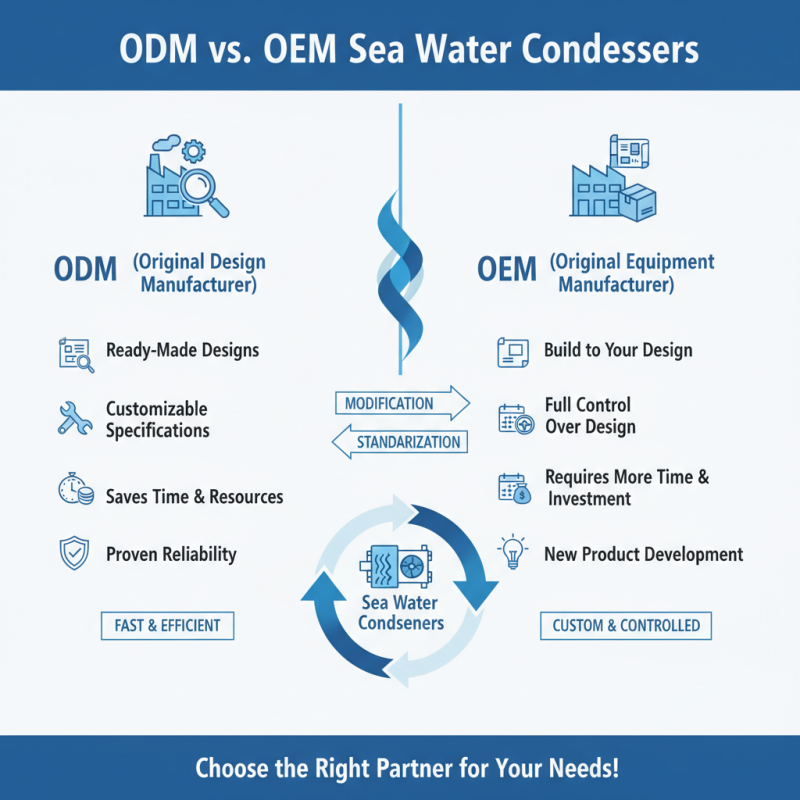
When choosing a manufacturer for your Sea Water Cooled Condenser, understanding the differences between ODM and OEM is crucial. ODM, or Original Design Manufacturer, offers ready-made designs that can be customized to meet your unique specifications. This approach can save significant time and resource investments. They often have an established track record in product reliability, which can be a reassuring factor when selecting a partner.
On the other hand, OEM, or Original Equipment Manufacturer, is more about customization from the ground up. They work closely with you to develop a product that fits your exact needs. This might involve more upfront effort but can lead to a tailored solution that perfectly aligns with your requirements. Choosing between them depends on your project scope and the level of involvement you desire in the manufacturing process.
It's essential to assess the expertise of potential partners. Look for manufacturers with a strong portfolio in sea water systems. Ask questions about past projects, manufacturing processes, and quality control. Not all manufacturers have the same capabilities or experience, so doing thorough research is vital. Pay attention to their certifications and client feedback. These aspects help establish reliability and credibility in the highly technical field of sea water condensers.
Key Factors to Consider When Choosing a Manufacturer
Choosing the right ODM OEM sea water condenser manufacturer is crucial. Start by evaluating their experience in the industry. An experienced manufacturer understands the complexities of
Sea Water Heat Exchanger systems. They can design and produce condensers that meet strict quality standards. This expertise ensures reliability in harsh marine environments.
Next, consider the technical capabilities of the manufacturer. Look for advanced equipment and skilled engineers. They should have a strong track record in producing efficient sea water heat exchangers. It’s essential that their technology aligns with your specific requirements. A manufacturer that invests in innovation is more likely to provide superior products.
Don't overlook customer support and communication. A responsive team can address your concerns promptly. Lack of support often leads to misunderstandings and delays. Reflect on your interactions with potential manufacturers. How well did they listen to your needs? Assessing these factors will help ensure a successful partnership.
Assessing Manufacturer's Experience and Expertise in the Industry
When selecting an ODM or OEM sea water condenser manufacturer, experience is crucial. Experienced manufacturers understand the complexities involved. They know how to navigate challenges unique to marine environments. Having a solid track record is often indicative of reliability. Manufacturers with years in the industry can provide insights and innovative solutions.
Expertise in technical aspects is equally important. A manufacturer must demonstrate a deep understanding of condenser technology. Look for companies that share case studies or technical white papers. This showcases their commitment to knowledge and transparency. However, not all manufacturers prioritize this. Sometimes, information might be too technical or lack clarity. It's essential to assess if they communicate effectively.
Assessing a manufacturer's qualifications also involves checking certifications and partnerships. This helps establish credibility. Nevertheless, be wary of overselling. Some companies may exaggerate their expertise. Scrutinize their portfolio for real achievements. Concrete results in past projects highlight their capability and reliability. Weigh the evidence critically, and make an informed decision.
Evaluating Quality Standards and Certifications of Products
When selecting an ODM or OEM sea water condenser manufacturer, quality standards and certifications play a vital role. Many manufacturers claim to meet high standards, but not all can back these claims with valid certifications. The ISO 9001 certification is a good starting point. It indicates a commitment to quality management. This certification ensures that the manufacturer follows consistent processes to improve product quality.
Another critical certification to consider is the CE marking. It signifies that the products meet European safety, health, and environmental protection requirements. These certifications help in ensuring the reliability of Sea Water Chillers. However, navigating these standards can be complex. Some smaller manufacturers may not have complete certifications, raising questions about their product quality.
Assessing the manufacturer’s history can also reveal much about their reliability. Look for years of experience in the industry. Long-standing manufacturers often have established relationships with customers. Read reviews and case studies to understand their performance. However, watch for overly polished testimonials that may not tell the whole truth. Engaging with manufacturers directly and asking specific questions can also highlight their expertise and reliability in producing sea water chillers.
Reviewing Customer Feedback and Case Studies
When choosing a sea water condenser manufacturer, customer feedback can be a goldmine. Look for reviews that highlight durability and efficiency. Positive testimonials from verified clients can show how a manufacturer handles real-world challenges. A strong customer base often indicates reliability and quality.
Case studies are another critical resource. They provide insight into how a manufacturer approaches specific problems. For instance, detailed case studies can showcase successful installations in various environments. Understanding these stories helps gauge a manufacturer's adaptability. Reflecting on the challenges faced by others can guide you in making informed choices.
Not every review or case study will be flawless. Some may highlight issues with service responsiveness or product performance. It's essential to weigh these negatives against the positives. Real experiences often reveal valuable lessons, emphasizing the importance of thorough research. Balancing these factors can lead to a well-rounded perspective on potential manufacturers.
Analyzing Cost-Effectiveness and Pricing Structures
When selecting a suitable ODM OEM sea water condenser manufacturer,
cost-effectiveness is crucial.
Industry reports highlight that material costs can vary significantly among suppliers.
For instance, copper prices have fluctuated between $3-4 per kilogram recently,
affecting overall pricing. Understanding these elements helps in negotiating better deals.
Additionally, pricing structures can differ widely.
Some manufacturers adopt a low-cost model, while others focus on high-quality production.
A study by the International Maritime Organization suggests that choosing a cost-effective manufacturer can save up to 30%
on initial investments. However, the trade-off often comes with quality concerns.
It’s essential to evaluate long-term durability alongside upfront pricing.
Another important aspect is warranty and service.
Some manufacturers promote attractive pricing but offer limited support. A report by Market Research Future reveals that warranty claims could
increase costs by 15-20% in the first few years. Therefore, balancing price with reliability ensures better investment
in the long run.
Exploring After-Sales Support and Warranty Options
When selecting an ODM OEM sea water condenser manufacturer, after-sales support and warranty options are critical considerations. Many manufacturers offer various warranty lengths. However, the specifics of what the warranty covers can differ significantly. Some may only cover parts, while others include labor. It’s essential to clarify these details before making a commitment. Strong after-sales support can reflect a manufacturer's reliability and commitment to their product.
Good after-sales support means timely responses to inquiries and efficient troubleshooting. Look for manufacturers that provide comprehensive training on operating and maintaining your Sea Water Cooled Chiller. This ensures that your team can efficiently handle day-to-day operations and minor issues. Consider whether the manufacturer has local representatives who can provide on-site assistance if needed.
Not all manufacturers prioritize customer support equally. Some may overlook this aspect, leaving clients frustrated when complications arise. Take time to read reviews and seek feedback. Engage in discussions with existing clients about their experiences. Their insights can reveal the true reliability of the manufacturer’s support services. The right manufacturer can significantly affect the longevity and efficiency of your sea water cooled chiller.
Innovative Steam-to-Water Heat Exchangers: Enhancing Efficiency and Sustainability in Industrial Applications
Innovative steam-to-water heat exchangers have become essential components in enhancing efficiency and sustainability within various industrial applications. These units typically operate by allowing steam to travel through the shell side, where it efficiently condenses and transfers heat to water flowing inside the tubes. This design not only maximizes heat transfer but also ensures that the energy is utilized optimally, reducing waste and enhancing overall system performance.
The advanced construction of these heat exchangers includes optimized heat transfer surfaces and effective condensate removal systems. These features play a crucial role in maintaining maximum thermal efficiency while significantly minimizing energy losses. As a result, industries can experience lower operating costs and improved productivity. Additionally, the robust design allows these units to withstand high temperature and pressure conditions, ensuring reliability and longevity with minimal maintenance requirements. This combination of efficiency and durability positions steam-to-water heat exchangers as a critical asset in the pursuit of sustainable industrial practices.
FAQS
: Experienced manufacturers understand complex challenges specific to marine environments, indicating reliability.
Look for case studies or technical documents. This shows commitment to knowledge and effective communication.
Verify the authenticity of certifications. Some companies may exaggerate their qualifications for market advantage.
Clarify what the warranty covers, like parts or labor. Different manufacturers may offer varying levels of coverage.
Strong after-sales support ensures timely responses and efficient troubleshooting. This reflects the manufacturer's reliability.
Good manufacturers provide training for operation and maintenance. This helps your team manage day-to-day issues efficiently.
Read reviews and seek feedback from existing clients. Their experiences reveal the effectiveness of the support provided.
Manufacturers without local support can cause delays. Ensure there’s adequate assistance for on-site issues when needed.
Some may neglect customer support, leading to frustration. Engaging with others can help identify reliable partners.
Reviewing past projects reveals a manufacturer's true capabilities. Focus on tangible outcomes over vague claims.
Conclusion
Choosing the right ODM or OEM manufacturer for a Sea Water Condenser involves several critical factors. First, it's essential to understand the distinctions between ODM and OEM, as they can impact design flexibility and production processes. Evaluating a manufacturer's experience and expertise in the industry is crucial, as it directly correlates with the reliability of the product and the manufacturer's ability to meet specific needs.
Quality standards and certifications should be scrutinized to ensure that the Sea Water Condenser meets both safety and performance benchmarks. Customer feedback and case studies provide insights into the manufacturer's reputation and the effectiveness of their products in real-world applications. Additionally, analyzing cost-effectiveness and pricing structures, along with exploring after-sales support and warranty options, will help ensure a beneficial partnership that meets both budgetary and operational requirements.