Hydraulic heat exchangers might not be the most glamorous part of industrial equipment, but they’re honestly pretty important across a bunch of industries — from cooling systems to renewable energy projects. I recently read a report from the Thermal Engineering Institute that said the global market for these systems is expected to grow around 7% each year. That really shows how much people are craving energy-efficient heating and cooling options these days.
Dr. Emily Anderson from Fluid Dynamics Corporation puts it pretty clearly: ‘A well-designed hydraulic heat exchanger can seriously boost how efficient a plant runs.’ But, of course, a lot of companies still struggle with optimizing these systems — they often overlook regular maintenance or fall for some myths about how complex they are, which ends up costing them.
For example, if engineers focus on smartly integrating these heat exchangers into their setups, the results can be pretty impressive. Don’t underestimate their role, especially in systems like heat pump heat exchangers. Getting them just right is the secret to hitting those performance goals you’re aiming for.
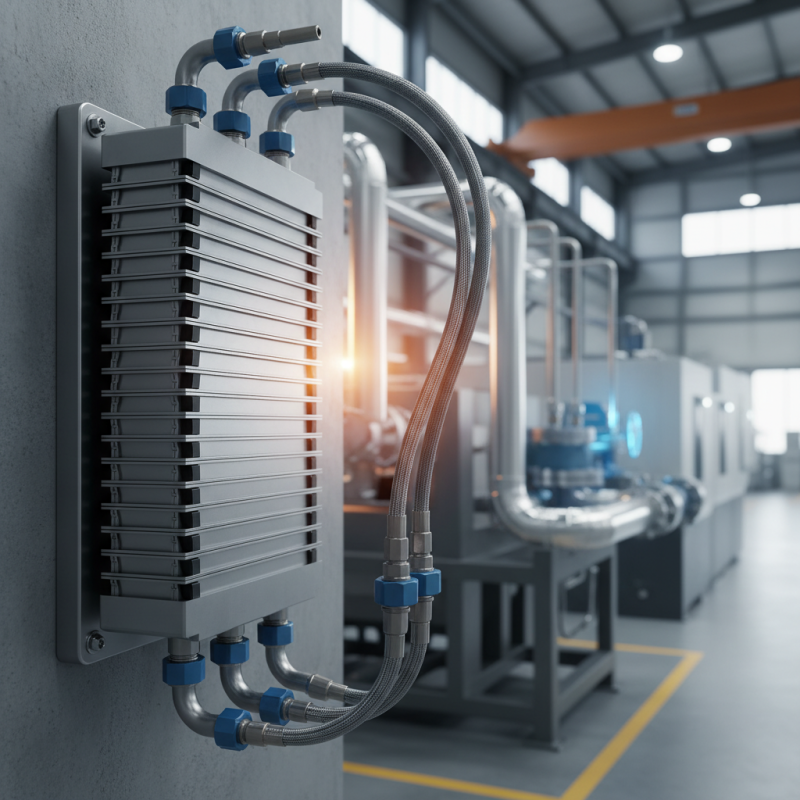
What Is a Hydraulic Heat Exchanger: Definition and Overview
A hydraulic Heat Exchanger is a crucial component in various industrial applications.
It transfers heat between two fluids without mixing them. This process allows efficient energy use, critical in many systems. The design typically features a
network of tubes or plates where one fluid absorbs heat from the other.
In practice, the fluids can be liquids or gases. The choice depends on the specific requirements of the system. For instance,
water might be heated to warm a facility, while another fluid cools down
industrial machinery. However, the efficiency of a heat exchanger can sometimes be questioned. Fouling can occur, reducing
transfer efficiency. Regular maintenance and cleaning often get overlooked, leading to suboptimal performance.
Understanding the operation of a hydraulic heat exchanger is essential. It covers various principles of thermodynamics.
When heat transfer isn’t optimal, energy costs can rise. Analyzing the setup often reveals flaws in design or installation.
Addressing these issues can significantly enhance performance. Thus, continuous evaluation and adjustment are necessary for the
best results in heat exchanger efficiency.
Key Components of Hydraulic Heat Exchangers in Fluid Systems
Hydraulic heat exchangers play a pivotal role in fluid systems, facilitating effective heat transfer. Central to their operation are several key components, including the heat exchange surface, pumps, and control valves. The heat exchange surface, often made of metals, allows for efficient thermal conduction. This surface size is crucial; larger surfaces enhance heat transfer rates. According to industry reports, systems can be optimized for up to 80% efficiency, but achieving this requires precise engineering.
Pumps are equally important in hydraulic heat exchangers. They circulate fluids, ensuring consistent flow rates and pressure. Inadequate pump selection can lead to inefficient heat transfer, increasing energy consumption. Control valves regulate fluid flow and temperature, impacting overall system performance. Research indicates that poorly calibrated valves can decrease system efficiency by 15% to 20%. If operators do not regularly check these components, they risk operational inefficiencies and higher operational costs.
In practice, one may find that maintaining these components is often overlooked. Regular inspections are essential but may not always be prioritized. This oversight can lead to not just energy waste but also costly repairs. Effective maintenance is a necessity, not just a recommendation. System operators must adopt a proactive approach to ensure all components function optimally, significantly impacting system longevity and efficiency.
Principles of Heat Transfer: Conduction, Convection, and Radiation
Heat transfer is essential in various applications, especially in hydraulic heat exchangers. Three main principles govern this process: conduction, convection, and radiation. Each method plays a crucial role in how heat moves.
Conduction occurs when two solid materials are in direct contact. Heat moves from the hot side to the cold side. This transfer happens at the molecular level. For example, if you touch a hot metal surface, heat transfers to your skin. It’s immediate and can cause burns.
Convection involves fluids. It occurs when heated fluid rises, while cooler fluid sinks. This creates a current that helps distribute heat. Think about boiling water. The hot water at the bottom rises while the cooler water falls.
Tip: Use insulation to enhance conduction in your systems. It reduces unwanted heat loss.
Radiation is different. It does not need a medium. Heat travels in electromagnetic waves, like the warmth from the sun. This principle is less common in hydraulic systems.
Tip: Regular maintenance of your heat exchanger is crucial. Check for leaks or blockages. They can affect efficiency.
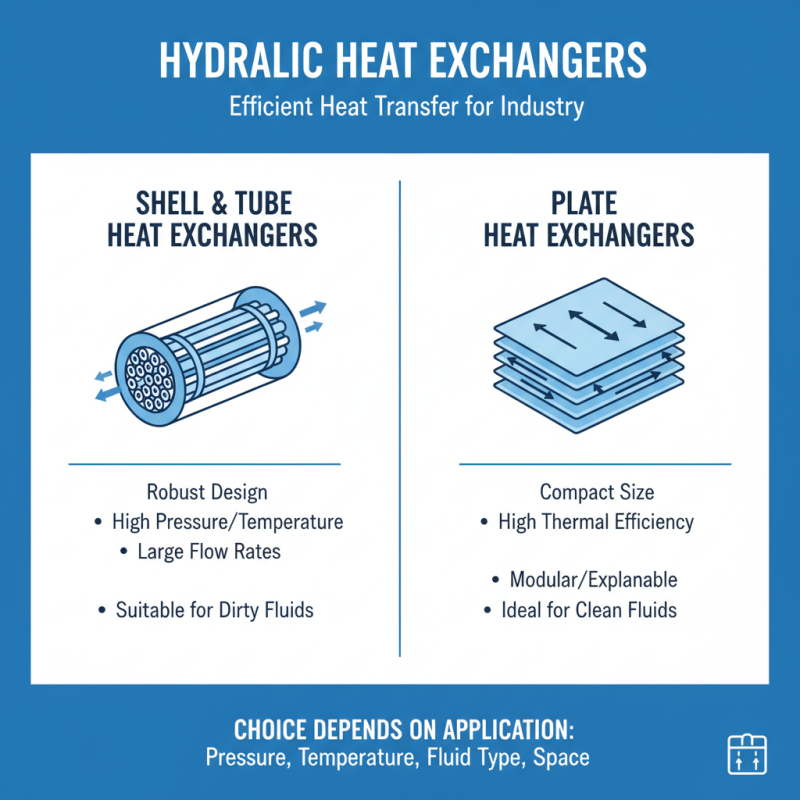
Types of Hydraulic Heat Exchangers: Shell and Tube vs. Plate Design
Hydraulic heat exchangers play a vital role in various industries, effectively transferring heat between fluids. Two main designs dominate this sector: shell and tube heat exchangers and plate heat exchangers. Each has unique advantages based on application requirements.
Shell and tube heat exchangers consist of a series of tubes. Hot and cold fluids flow through these tubes. The design facilitates large heat transfer areas. Reports indicate that 70% of industrial heat exchangers use this type. They are robust and ideal for high-pressure applications. However, cleaning them can be challenging. Maintenance requires careful planning and periodic inspection.
Plate heat exchangers, on the other hand, utilize thin plates for heat transfer. This design allows for a compact size and higher efficiency. They can achieve a 20% greater heat transfer efficiency compared to shell and tube models. However, their susceptibility to fouling can complicate operations. Regular maintenance is essential to ensure long-term performance. Considering the specifics of each design is crucial for optimal selection in any system.
Common Applications of Hydraulic Heat Exchangers in Industry
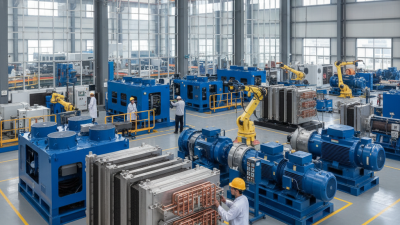
Hydraulic heat exchangers play a crucial role in various industrial applications. They transfer heat between two fluids, enhancing efficiency. These devices are widely used in power plants, manufacturing facilities, and chemical processing. For instance, in power generation, they help maintain optimal temperatures in hydraulic systems, preventing overheating.
Another significant use is in oil processing. The Oil Heat Exchanger cools and heats oils, ensuring smooth operations. This process is vital in hydraulic systems. Without it, performance drops, and equipment can fail. Moreover, food processing units utilize hydraulic heat exchangers to control temperatures during pasteurization. Effective temperature control is essential here.
Hydraulic heat exchangers are essential yet can be prone to fouling and scaling. Regular maintenance is often overlooked. This oversight can lead to inefficiencies. Industries must reflect on their processes to ensure optimal performance. Identifying potential improvements is key.
Performance Metrics: Efficiency Ratings and Thermal Capacity Calculations
When evaluating hydraulic heat exchangers, efficiency ratings and thermal capacity calculations are key metrics. Efficiency ratings often vary, typically ranging from 70% to over 90%. These ratings are crucial, as they indicate how effectively the system transfers heat. A well-designed hydraulic heat exchanger can dramatically enhance thermal performance.
Thermal capacity calculations play a vital role in the design process. These calculations ensure the heat exchanger can handle the necessary heat transfer load. For instance, a Gas Heat Exchanger needs to account for changes in temperature and pressure. These factors directly influence performance and system reliability. Industrial reports suggest ideal flow configurations can improve capacity by up to 30%. However, many systems fall short. Engineers may overlook small design flaws, impacting overall thermal efficiency.
Routine maintenance is essential for maintaining performance metrics. Neglecting regular checks can lead to decreased efficiency. It's common for systems to have hidden inefficiencies. Addressing these issues requires continuous monitoring and adjustment. Ultimately, both efficiency ratings and thermal capacity are vital for optimizing hydraulic heat exchangers.
What is a Hydraulic Heat Exchanger and How Does It Work? - Performance Metrics: Efficiency Ratings and Thermal Capacity Calculations
| Parameter |
Value |
Unit |
| Efficiency Rating |
85 |
% |
| Thermal Capacity |
25000 |
kW |
| Fluid Flow Rate |
120 |
L/min |
| Inlet Temperature (Hot Side) |
150 |
°C |
| Inlet Temperature (Cold Side) |
30 |
°C |
| Heat Transfer Area |
200 |
m² |
| Pressure Drop |
0.5 |
bar |
Maintenance Practices for Enhancing Longevity of Heat Exchangers
Maintaining a hydraulic heat exchanger is crucial for its efficiency and longevity. Regular inspections can detect early signs of wear. Monitor the Tube Heat Exchanger for leaks, blockages, or corrosion. These issues can lead to decreased performance and costly repairs. A simple visual check may not be enough; deeper analysis is often necessary.
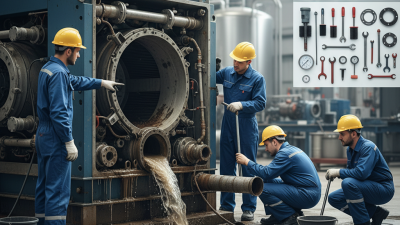
Cleaning the heat exchanger is essential. Accumulated debris can hinder heat transfer. Use appropriate cleaning methods tailored to the material and design. For instance, chemical cleaning agents may be effective, but they must be chosen carefully to avoid damaging the system. Disassembled units allow for thorough cleaning, yet this process requires time and planning.
In addition to cleaning, regular fluid replacement is important. Old fluids can become contaminated, impacting performance. Systematic fluid monitoring should be practiced. Ensure that the fluid levels are optimal. It's easy to overlook this small aspect, but neglecting it can shorten the lifespan of the tube heat exchanger. Effective maintenance requires commitment and a proactive approach to minor details.
Hydraulic Heat Exchanger Efficiency and Maintenance Practices
This chart illustrates the impact of various maintenance practices on the efficiency and performance of hydraulic heat exchangers, showcasing the importance of consistent upkeep and the effect of factors like cleaning frequency and scaling issues on overall performance.
FAQS
: You might feel jittery and anxious. It can disrupt your sleep patterns.
Taking short breaks can help. Try moving around for a few minutes.
Noisy coworkers can interrupt your thoughts. Notifications from devices can also pull you away.
An organized space promotes clearer thinking. It helps in finding items more easily.
Setting small, achievable goals can provide a sense of accomplishment. Celebrate those wins.
While it may seem efficient, it often reduces overall productivity. Errors may increase too.
Skipping meals might lead to low energy levels. Overeating later can also happen.
Regular exercise can reduce stress levels. Mindfulness practices are also beneficial.
Staying hydrated aids cognitive function. Even mild dehydration can affect your performance.
Consider what drains your energy. Identify activities that do not align with your goals.
Conclusion
A Hydraulic Heat Exchanger is a vital component in fluid systems, designed to efficiently transfer heat between two fluids without mixing them. It operates on the principles of heat transfer—conduction, convection, and radiation—utilizing key components like heat exchanger surfaces and flow channels. The most common designs include shell and tube, and plate heat exchangers, each suitable for different applications based on thermal capacity and efficiency requirements.
In various industrial applications, hydraulic heat exchangers play a crucial role in maintaining optimal temperatures and enhancing system performance. To ensure their longevity and efficiency, regular maintenance practices are essential, focusing on efficiency ratings and thermal capacity calculations to monitor performance metrics closely. Understanding these components and principles is critical for maximizing the operational lifespan of hydraulic heat exchangers in any fluid system.