Request Quote
Leave Your Message
0%

In the constantly changing world of Heat Exchanger HVAC, knowing who the key players are can really make all the difference. I remember Dr. Emily Zhang, a well-known expert in HVAC systems, once said, "Having the right partner when it comes to heat exchanger manufacturing can totally boost energy efficiency." That really hits home, emphasizing how important it is to choose manufacturers who don’t just tick the boxes but also push the envelope with innovation.

China has really stepped into the spotlight as a major hub for companies specializing in Heat Exchanger HVAC systems. These firms often blend cutting-edge tech with a ton of experience, focusing on building reliable and efficient solutions that serve a bunch of different industries. Names like Hitec Products and Jieneng Group are often mentioned for their high-quality heat exchangers.

Of course, it’s not all smooth sailing. Maintaining top-notch quality remains a big challenge. Companies need to keep a close eye on their processes to avoid defects and make sure their products perform as expected. And since many of them rely on OEM and ODM services, transparency and teamwork are more important than ever. Picking the right manufacturer isn’t just about the price — it’s about really understanding the standards of the industry and making smart choices.

All in all, diving into this market means staying sharp and knowing who can truly deliver. It’s a bit complex, but with the right info, you’ll be ahead of the game.
China Top 10 OEM ODM Heat Exchanger HVAC Manufacturers You Should Know?

Top OEM ODM Heat Exchanger Manufacturers in China: An Overview

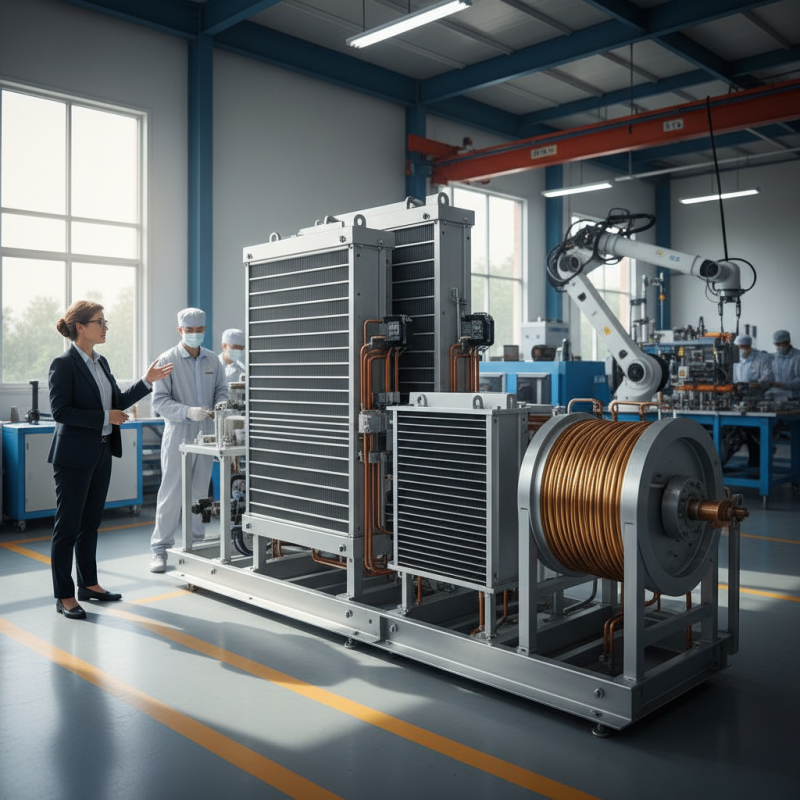
China is a key player in the HVAC industry, particularly in OEM and ODM heat exchangers. These manufacturers are crucial for developing efficient energy systems. Many companies focus on producing innovative designs to meet market demands. High-quality materials and advanced technology are often features that set them apart. Customers seek reliable products that enhance performance and energy efficiency.

Some manufacturers excel in customization. They offer tailored solutions to various industries, from residential buildings to large commercial projects. This adaptability helps them cater to diverse client needs, which can sometimes lead to inconsistencies in product delivery. Finding the balance between standardization and customization can be challenging.

Quality control remains a pressing issue. Despite advancements, not all manufacturers maintain the same level of scrutiny. Regular audits and customer feedback loops could improve this. Manufacturers must continuously reflect on their processes. Enhancing transparency and reliability should be priorities in their strategy.

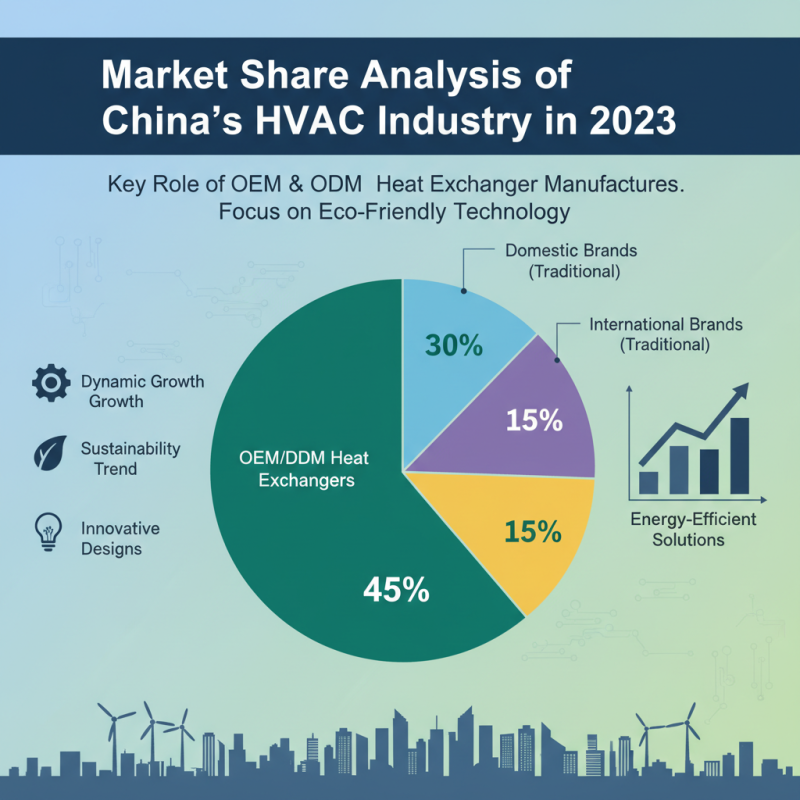
Market Share Analysis of China's HVAC Industry in 2023

China Top 10 OEM ODM Heat Exchanger HVAC Manufacturers You Should Know?

In 2023, China's HVAC industry continues to show dynamic growth. The market share of OEM and ODM heat exchanger manufacturers plays a crucial role in this landscape. Many manufacturers are emerging, showcasing innovative designs and energy-efficient solutions. The trend toward sustainability is notable. Companies prioritize eco-friendly technology to attract environmentally-conscious clients.

Recent statistics suggest a growing demand for heat exchangers, particularly in urban areas. The competition is fierce, with numerous manufacturers vying for market share. Some established players face challenges retaining their client base. New entrants bring fresh ideas and aggressive pricing strategies. This creates pressure on older companies to innovate or risk losing ground.

This sector is also impacted by global supply chain shifts. Fluctuations in raw material costs can disrupt production. Some manufacturers struggle to maintain quality during economic downturns. There’s a need for continuous improvement and adaptation to stay relevant. The focus on durability and efficiency will shape future designs. Crafting products that perform well under various conditions remains an ongoing challenge. Balancing cost-effectiveness with quality is critical for sustained success.

Key Technologies Used in Heat Exchangers by Leading Manufacturers

In the HVAC industry, heat exchangers play a critical role in energy efficiency and environmental sustainability. Advanced technologies are reshaping how manufacturers approach heat transfer systems. Many leading manufacturers utilize plate heat exchangers due to their compact design and high efficiency. According to industry reports, these exchangers can increase heat transfer efficiency by up to 50% compared to traditional systems.

Smart technology is also gaining traction. Manufacturers are integrating IoT sensors into Heat Exchangers Hvac systems. This allows for real-time monitoring and predictive maintenance. Reports suggest that predictive maintenance can reduce downtime by 30%. Yet, the challenge remains in ensuring data security, as connected systems may be vulnerable to cyber threats.

Another key technology is the use of corrosion-resistant materials. Manufacturers are moving towards materials that enhance durability and performance. Stainless steel and titanium are becoming more common to extend the lifespan of heat exchangers. However, these materials can drive up costs, forcing companies to balance performance and budget. As the industry evolves, sustainability and innovation should remain at the forefront.

Comparative Study of Performance Metrics Among Top Heat Exchanger Brands

When evaluating heat exchanger manufacturers, performance metrics offer crucial insights. Efficiency is often measured by thermal conductivity. A recent industry report highlights that top brands achieve thermal efficiencies exceeding 90%. However, these numbers can vary significantly among manufacturers. Some may underperform, indicating potential issues in design or materials.

Durability is another essential metric. The lifespan of a heat exchanger can range from 10 to 25 years. Quality variations exist, with some brands experiencing early failures. This inconsistency raises questions about manufacturing standards and quality control protocols within the industry. The choice of materials directly impacts longevity and efficiency.

Cost-effectiveness also plays a vital role in performance metrics. While initial investment may be higher for certain brands, long-term savings through energy efficiency can justify the cost. A comparative analysis indicates that well-designed heat exchangers reduce energy consumption by up to 30%. However, not every manufacturer meets these standards, leading to discrepancies in overall value. Understanding these performance metrics can empower buyers to make informed decisions.

Performance Metrics of Top Heat Exchanger Manufacturers

This chart illustrates the comparative performance metrics of various heat exchanger manufacturers based on key dimensions such as efficiency, cost, durability, innovation, and customer ratings. Each metric provides insight into the strengths of these companies in the HVAC industry.

Sustainability Practices Adopted by OEM ODM HVAC Manufacturers in China

In recent years, HVAC manufacturers in China have increasingly adopted sustainable practices to meet global environmental demands. Many are now integrating energy-efficient technologies into their production lines. Recent industry reports highlight that over 60% of Chinese HVAC manufacturers have invested in cleaner alternatives. This shift significantly reduces carbon emissions during both production and operation.

Many manufacturers are exploring eco-friendly materials for their HVAC systems. For instance, using recyclable metals and sustainable insulation can lower overall environmental impact. Implementing closed-loop water systems in Hvac Water Chiller designs is another innovation contributing to sustainability. By recycling water, manufacturers not only minimize waste but also enhance system efficiency.

However, challenges remain in fully transitioning to sustainable processes. While many companies have made commitments, the implementation of these practices varies widely. Gaps in technology adoption and investment levels persist. Industry studies show that around 40% of manufacturers still rely on traditional methods, indicating room for improvement. A cohesive strategy across the manufacturing sector could accelerate sustainability efforts in HVAC systems nationwide.

Insights into R&D Investments by Top Heat Exchanger Producers

R&D investments significantly shape the effectiveness of heat exchanger manufacturers in China. Companies are increasingly focusing on innovative designs and materials. This trend is evident in the development of more efficient heat exchangers, which can improve energy consumption in systems like the Chilled Water Hvac System. These advancements often stem from strong collaboration between engineers and researchers.

In recent years, manufacturers have demonstrated a commitment to sustainability. They are exploring eco-friendly refrigerants and reducing waste in the manufacturing process. However, the path to innovation is not without its challenges. Some companies struggle with balancing cost and performance. Nonetheless, ongoing investments in research and development are starting to yield promising results, enhancing product reliability and efficiency.

On a broader scale, the impact of these investments reaches beyond just the product itself. Improved heat exchangers can lead to better overall system performance in HVAC applications. This effect is particularly noticeable in commercial sectors where efficiency translates directly to reduced operational costs. Future innovation depends on continuous R&D efforts and the ability to adapt to changing market demands.

Future Trends and Innovations in the Chinese HVAC Market

The Chinese HVAC market is rapidly evolving, driven by innovation and sustainability. One major trend is the increasing adoption of smart technology. Manufacturers are integrating IoT devices into HVAC systems. This allows for real-time monitoring and energy management. Such advancements aim to improve efficiency and reduce environmental impact.

Another significant development is the focus on energy-efficient solutions. Hvac Water Chillers And Cooling Towers play a critical role in industrial applications. They are being redesigned to use less energy while maintaining high performance. However, achieving the perfect balance between efficiency and cost remains challenging.

Moreover, there is a growing emphasis on environmentally friendly refrigerants. Many manufacturers are seeking alternatives that minimize harmful effects. The transition poses obstacles, as safety and effectiveness must be ensured. In addition, the market is seeing an increase in modular units, which offer flexibility for various applications. Adaptability to changing consumer needs is essential for manufacturers moving forward.

FAQS

: What is driving growth in China's HV

C industry in 2023?

What percentage of HVAC manufacturers are adopting sustainable practices?

Over 60% of manufacturers have invested in cleaner and more sustainable technologies recently.

How are manufacturers contributing to sustainability?

They use eco-friendly materials and adopt energy-efficient technologies to reduce carbon emissions.

What is the impact of competition on established HVAC companies?

Established companies face challenges in retaining clients due to aggressive pricing by new entrants.

What challenges do manufacturers face during production?

Fluctuations in raw material costs and the need for quality maintenance during downturns are significant issues.

Are all manufacturers transitioning to sustainable practices?

No, about 40% of manufacturers still rely on traditional methods, indicating room for improvement.

What strategies could enhance sustainability in the HVAC sector?

A cohesive strategy among manufacturers can accelerate the transition to sustainable practices.

How do closed-loop water systems help HVAC manufacturers?

These systems minimize waste and enhance efficiency by recycling water during operation.

What is the ongoing challenge for product designs in HVAC?

Designers must balance performance under varying conditions with cost-effectiveness and quality.

Why is there pressure on older HVAC companies?

They must innovate to avoid losing market share to new competitors with fresh strategies.

Conclusion

The article titled "China Top 10 OEM ODM Heat Exchanger HVAC Manufacturers You Should Know" provides a comprehensive overview of the leading heat exchanger manufacturers within China's HVAC industry. It examines the market share dynamics for 2023, highlighting the significant players and their contributions to the overall industry. Key technologies utilized by these manufacturers are discussed, showcasing innovations that enhance performance metrics and efficiency.

Moreover, the article delves into sustainability practices adopted by OEM and ODM producers, emphasizing their commitment to eco-friendly solutions. It also offers insights into the research and development investments made by top heat exchanger manufacturers, indicating a focus on future trends and innovations that will shape the Chinese HVAC market. Overall, the piece presents a clear picture of how the heat exchanger HVAC sector is evolving in China, driven by technological advancements and sustainable practices.

Ethan

Ethan

Ethan is a seasoned marketing professional at a leading refrigeration equipment company established in 2003, specializing in shell-and-tube condensers, evaporators, and advanced heat-exchange products. With a profound expertise in his field, Ethan dedicates himself to showcasing the company’s......
Previous Why Choose Film Type Evaporator at Canton Fair 2026?