
Leave Your Message
In the contemporary industrial era, the global energy sector is undergoing a profound transformation. As power plants strive to meet stringent carbon neutrality targets, the role of the chiller condenser for industrial power plant steam recovery has shifted from a peripheral component to a core strategic asset. Traditionally, low-pressure steam was often vented or condensed using inefficient cooling towers, resulting in significant thermal loss. Today, high-performance chiller condensers are engineered to reclaim this latent heat, converting what was once "waste" into a valuable energy resource.
The demand for these systems is surging in regions like Southeast Asia, Europe, and North America. In rapidly industrializing nations, the focus is on maximizing output from existing infrastructure. In contrast, developed markets are focusing on "Circular Energy" models where the chiller condenser acts as a bridge between the power cycle and secondary heat applications, such as district heating or industrial desalination.
In the heart of a thermal power plant, the Rankine cycle's efficiency is dictated by the temperature difference between the heat source and the sink. By utilizing a specialized chiller condenser, plants can maintain a lower and more stable back-pressure on the turbine. This optimization allows the turbine to extract more work from the same volume of steam, effectively boosting the megawatt output without increasing fuel consumption.
In CHP configurations, the chiller condenser plays a dual role. It not only manages the steam recovery process but also serves as the primary heat exchanger for secondary thermal loads. This is particularly critical in large-scale industrial complexes where high-purity water is required; the recovery process often includes a phase of condensation that yields high-quality distilled water, which can be reused in the boiler feed system.
Environmental regulations are increasingly mandating ZLD for industrial facilities. Chiller condensers are integral to the evaporation and concentration stages of ZLD. By recovering steam from wastewater evaporators, these units help close the water loop, ensuring that no liquid waste leaves the facility while simultaneously reclaiming thermal energy to drive the evaporation process itself.
The future of industrial power plant steam recovery is inextricably linked with digital transformation. We are seeing a move toward "Smart Condensers" equipped with IoT sensors that monitor fouling, vibration, and thermal gradient in real-time. AI-driven analytics can now predict when a condenser requires maintenance before efficiency drops, moving from reactive to predictive maintenance models.
Furthermore, the development of micro-grooved tube surfaces and nano-coatings is pushing the boundaries of heat transfer coefficients. These innovations allow for smaller, more compact condenser designs that can handle higher thermal loads, making them ideal for retrofitting older plants where space is at a premium.
Established in 2003 in Wuhan, China’s major transportation hub, Wuhan Qiaoxin Refrigeration Equipment Co., Ltd. is a modern leader in the research, design, and manufacture of shell-and-tube condensers and evaporators. With Class I and Class II Pressure Vessel Design and Manufacturing Licenses, we combine decades of expertise with cutting-edge CNC machining technology.
Our commitment to "Quality First, Pursuit of Perfection" has made us a trusted partner for global giants like Midea, Carrier, Dunham-Bush, and TICA. Whether it's for a local industrial plant or a massive international power project, our heat exchangers are engineered for resilience and efficiency.

Qiaoxin has passed the ISO 9001:2008 international quality management system certification. Our products meet rigorous global standards, including PED certification for European and American markets. We utilize CNC tube expanders and CO₂ flux-cored gas-shielded welding to ensure every weld and joint stands the test of time in high-pressure environments.


Efficient steam recovery relies on the principle of latent heat transfer. When steam transitions from a gaseous to a liquid state, it releases a massive amount of energy (approximately 2,260 kJ/kg). A chiller condenser designed for power plants must manage this phase change with precision. Our units utilize a "Flooded" design philosophy in many scenarios, where the refrigerant surrounds the tubes carrying the steam, or vice versa, depending on the specific recovery goals.
One of the critical challenges in steam recovery is the presence of non-condensable gases (NCGs) like air. If not properly managed, NCGs form a thin film on the heat transfer surfaces, acting as an insulator and drastically reducing efficiency. Our condensers feature integrated air-venting systems and baffle arrangements that ensure optimal steam distribution and continuous removal of NCGs, maintaining peak performance even under fluctuating loads.


Driven by a strong sense of mission toward the advancement of China’s refrigeration industry, Qiaoxin is committed to applying cutting-edge refrigeration technologies to promote harmonious coexistence between humanity and nature. We believe that "character comes before products, and quality is the lifeblood of an enterprise."
CONTACT OUR ENGINEERS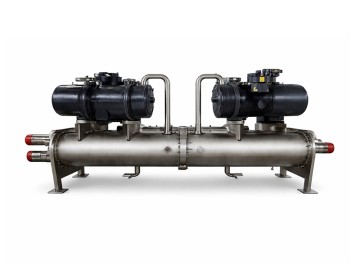 Premium Water Cooling Chiller Unit
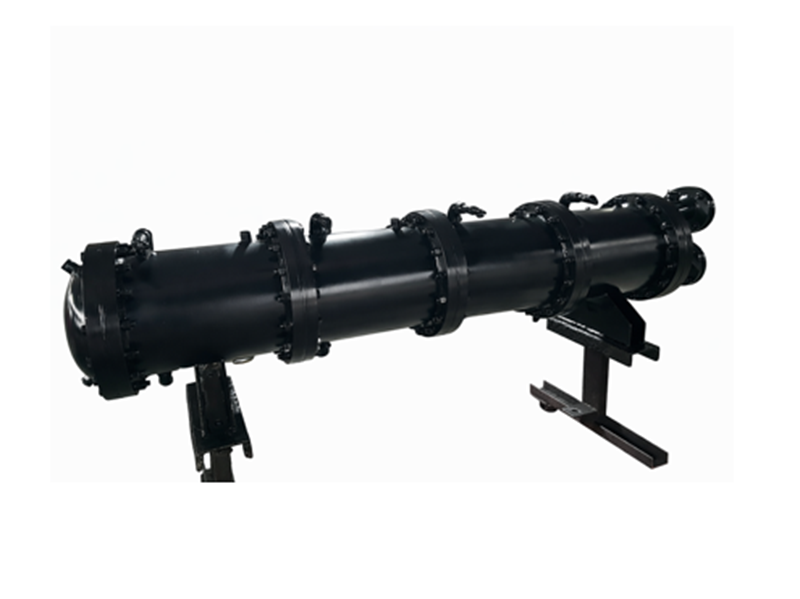 China Multi-Circuit Condenser Factory
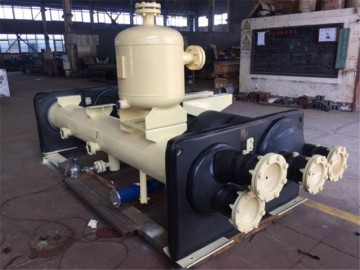 Single-Pass Flooded Evaporator with External Oil Separator
Maximum Cooling Efficiency Single-Pass Evaporator
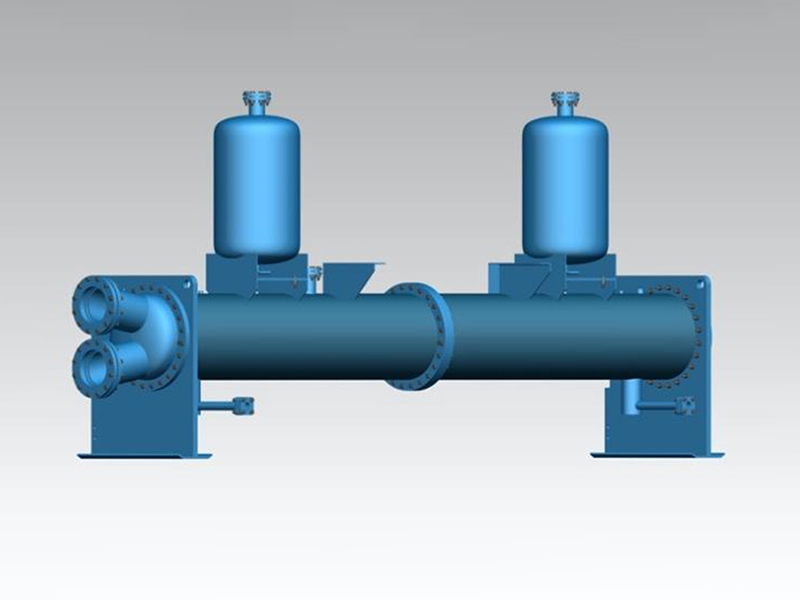 Multi-Pass Flooded Evaporator with Condenser
Multi-Circuit Condenser for Optimized Distribution
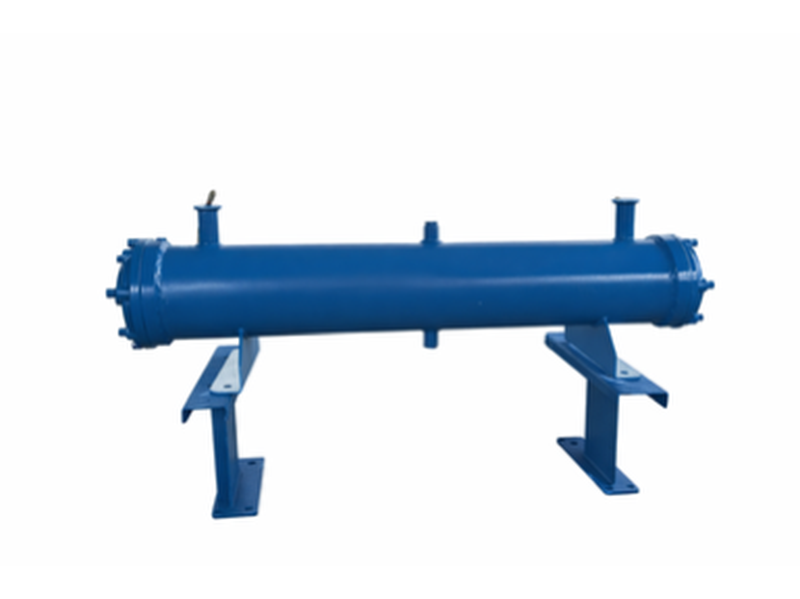 Single-Circuit Condenser Reliable Performance
Multi-Pass Flooded Evaporator Factory Solutions