Leave Your Message
Explore our core range of high-performance heat exchange solutions purpose-built for geothermal energy conversion applications.
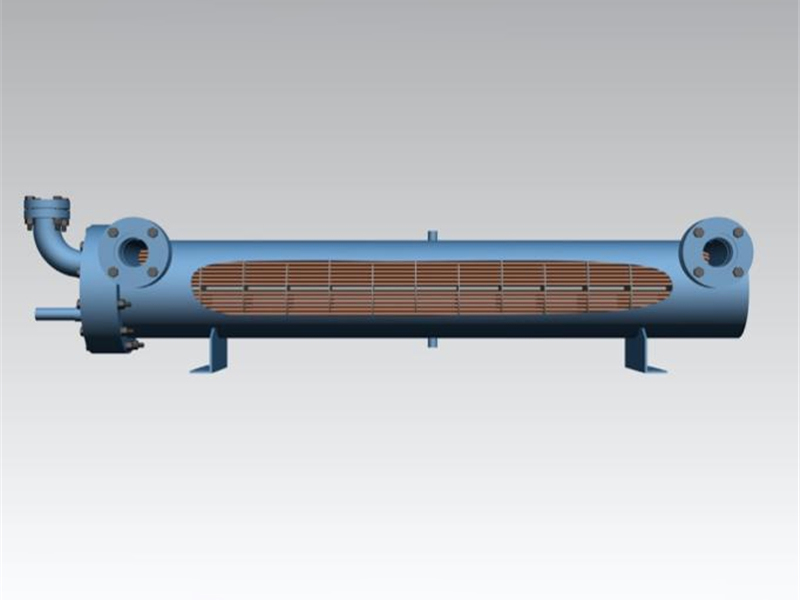
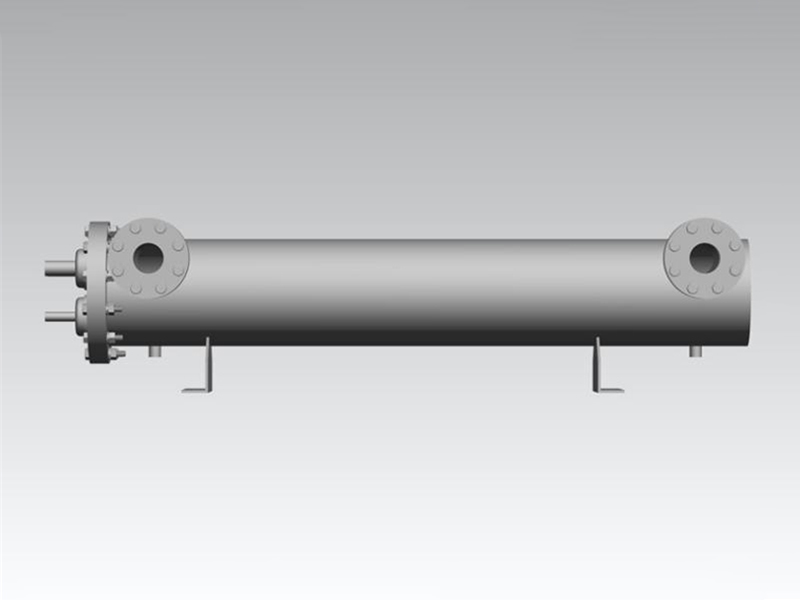
A Multiple Circuits Titanium Tube Condenser is a specialized shell-and-tube heat exchanger designed with parallel refrigerant circuits flowing through titanium tubes. This configuration dramatically improves heat transfer efficiency, reduces refrigerant charge requirements, and ensures exceptional corrosion resistance — qualities that are indispensable in geothermal energy conversion environments where fluids often contain dissolved minerals, salts, hydrogen sulfide, and other aggressive compounds.
Unlike conventional copper or stainless steel tube condensers, titanium tube variants offer a service life that is typically two to three times longer in geothermal brine contact, making them the material of choice for power plant operators seeking to minimize lifecycle costs and unplanned downtime.
The multi-circuit design enables precise load balancing across multiple compressor circuits, supporting modular capacity control — a critical requirement in geothermal ORC (Organic Rankine Cycle) systems where resource output can fluctuate seasonally or with reservoir pressure changes.
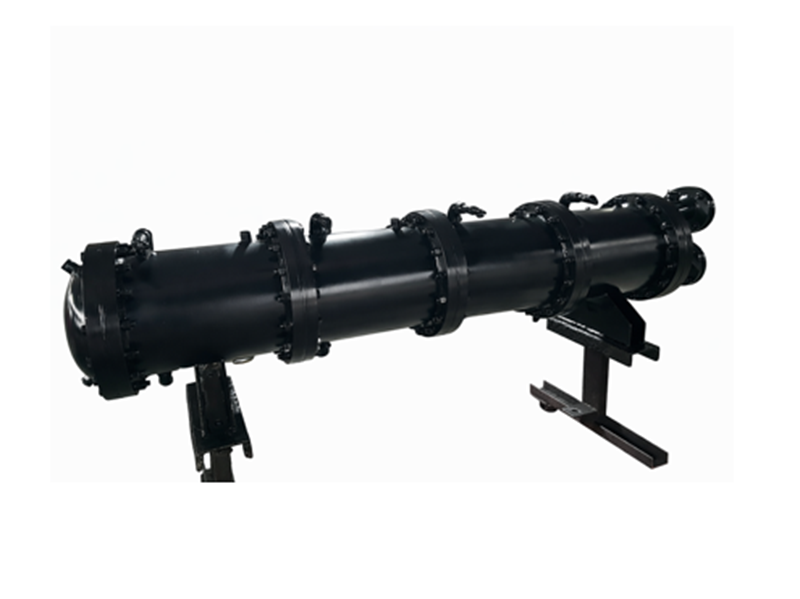
Commercially pure titanium (ASTM B338 Grade 2) offers outstanding resistance to chloride-induced corrosion, geothermal brine, and acidic condensate, ensuring decades of reliable service in demanding environments.
Parallel circuit architecture allows each compressor to operate independently, providing flexible capacity modulation from 25% to 100% load — ideal for variable geothermal resource output.
Internally enhanced or grooved titanium tubes increase the turbulence of working fluids, improving the overall heat transfer coefficient (U-value) by up to 30% compared to smooth tube designs.
Designed and manufactured per ASME, PED, and GB 150 pressure vessel standards, supporting operating pressures up to 4.2 MPa for compatibility with high-enthalpy geothermal steam and ORC working fluids.
Fully compatible with next-generation low-GWP refrigerants including R1234ze, R245fa, R600a, and natural working fluids used in modern binary-cycle geothermal power plants.
Removable tube bundles and accessible tube sheets facilitate in-situ cleaning, inspection, and replacement — minimizing plant downtime and reducing total maintenance costs over the equipment lifecycle.
The global geothermal energy market is undergoing rapid expansion, driven by decarbonization mandates, energy security concerns, and the maturation of binary-cycle and enhanced geothermal system (EGS) technologies. Understanding where multiple circuits titanium tube condensers fit within this landscape is essential for procurement engineers and plant operators.
Global geothermal power capacity surpassed 16 GW in 2024 and is projected to exceed 24 GW by 2030 according to IRENA forecasts. The Asia-Pacific region — particularly Indonesia, the Philippines, Japan, and New Zealand — leads new project development, creating massive demand for corrosion-resistant heat exchange equipment capable of handling aggressive geothermal fluids.
Beyond power generation, industrial direct-use of geothermal heat (district heating, food processing, aquaculture, timber drying) is growing at 8–12% annually. These applications require robust condensers and heat exchangers that can operate continuously with minimal maintenance in remote or semi-remote locations, making titanium tube multi-circuit units the preferred specification.
Over 70% of new geothermal power plants commissioned since 2020 use binary-cycle Organic Rankine Cycle (ORC) technology, which relies heavily on shell-and-tube condensers to reject heat from the working fluid. Multiple circuits titanium tube condensers are the standard specification for ORC condensers in medium-to-high enthalpy geothermal fields due to their combination of thermal efficiency and chemical durability.
Geothermal plants are increasingly being co-located with solar PV, wind, and battery storage to form hybrid renewable energy systems. This operational complexity demands heat exchange equipment that can rapidly cycle between partial and full load — a key strength of multi-circuit condenser designs that allow individual circuits to be isolated without shutting down the entire unit.
Machine learning algorithms are being deployed to continuously optimize refrigerant distribution across multiple circuits based on real-time geothermal fluid temperature and flow data, maximizing COP and minimizing fouling accumulation on tube surfaces.
Research into Ti-0.15Pd (Grade 7) and Ti-3Al-2.5V alloy tubes is accelerating, offering superior resistance to crevice corrosion in high-chloride geothermal brines at elevated temperatures above 150°C, opening new high-enthalpy application windows.
Embedded sensor arrays and IIoT connectivity are transforming condenser monitoring, enabling plant operators to track tube-side fouling resistance, shell-side pressure drop, and refrigerant superheat in real time — predicting maintenance needs weeks in advance and eliminating unplanned outages.
Titanium's near-100% recyclability aligns with ESG reporting requirements for geothermal project developers. End-of-life titanium tube bundles can be fully reclaimed, reducing the total environmental footprint of the condenser over its 25–40 year operational lifespan.
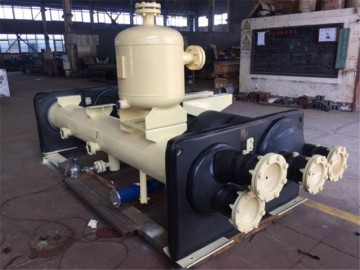
Factory-assembled, skid-mounted condenser packages incorporating multiple circuits titanium tube units, refrigerant headers, instrumentation, and safety valves are reducing installation time at geothermal sites by up to 60%, particularly in remote or offshore locations.
Advances in working fluid selection and condenser design are enabling economically viable power generation from geothermal resources as low as 70–90°C, dramatically expanding the global geothermal resource base accessible to binary-cycle ORC technology.
In ORC-based geothermal power plants, the condenser is the critical component that rejects heat from the organic working fluid (typically pentane, butane, or HFC refrigerants) to a cooling medium. Multiple circuits titanium tube condensers enable each ORC turbine module to operate independently, supporting partial-load efficiency during off-peak periods and simplifying maintenance scheduling without full plant shutdown.
Urban geothermal district systems in Iceland, Germany, France, and China use titanium tube condensers as primary heat exchangers between geothermal brine loops and secondary distribution networks. The multi-circuit design allows zone-by-zone load control, matching the variable demand profiles of residential and commercial building clusters throughout the day and across seasons.
Titanium tube condensers are the standard specification for geothermal heat exchangers in aquaculture operations, where corrosive brine must be isolated from sensitive fish-rearing water. Multiple independent circuits allow different tanks or processing zones to be supplied at different temperatures simultaneously from a single geothermal well, optimizing resource utilization.
Geothermal energy is increasingly used to supply process heat for food drying, paper manufacturing, textile processing, and chemical production. Multiple circuits titanium tube condensers serve as the primary heat transfer interface, with each circuit independently supplying different process streams at the required temperatures — eliminating the need for multiple separate heat exchangers.
Emerging offshore geothermal and ocean thermal energy conversion (OTEC) projects demand heat exchangers with extreme corrosion resistance to seawater and marine biofouling. Titanium tube multi-circuit condensers are the only commercially viable option for these environments, offering the combination of seawater compatibility, compact footprint, and long service intervals required for offshore platform deployment.
Next-generation EGS projects — which create artificial geothermal reservoirs by hydraulic fracturing of hot dry rock — produce working fluids with complex and variable chemistry. Multiple circuits titanium tube condensers provide the chemical resilience and operational flexibility needed to handle the unpredictable fluid compositions encountered during EGS reservoir development and long-term production phases.
Company Profile
Wuhan Qiaoxin Refrigeration Equipment Co., Ltd. was established in 2003 and is located in Wuhan, Hubei Province — China's major transportation hub connecting nine provinces. The company is a modern enterprise specializing in the research, design, manufacture, and sales of shell-and-tube condensers, evaporators, and other heat-exchange products. In terms of technology, Qiaoxin has consistently maintained a leading position in the domestic market.
Qiaoxin holds Class I and Class II Pressure Vessel Design Licenses and a Pressure Vessel Manufacturing License. The company is equipped with advanced production facilities, including CNC machining centers, CNC tube expanders, CNC cutting machines, and CO₂ flux-cored gas-shielded welding equipment, as well as a team of experienced professionals who have long been engaged in heat exchanger design and manufacturing. Through continuous research, development, and practical application, Qiaoxin has established a comprehensive management system that encompasses the entire process, from design and manufacturing to installation and commissioning, across a range of heat exchanger types and scales.


The company is capable of providing products for a wide range of operating conditions, featuring rigorous and innovative designs, meticulous workmanship, and the flexibility to meet diverse customer requirements. Qiaoxin has also passed the ISO 9001:2008 international quality management system certification, ensuring strict control over the entire process of product development, design, production, inspection, and after-sales service through an advanced quality management system.


"Quality First, Pursuit of Perfection" is the guiding principle of Qiaoxin's development. After years of growth, the company has earned widespread praise from customers at home and abroad for its outstanding product performance and efficient, responsive service. Its products are exported to Europe and the United States (PED certified), Southeast Asia, Africa, and throughout China, serving well-known domestic air-conditioning brands such as Midea, Chigo, Dunham-Bush, and TICA.
For geothermal energy conversion applications specifically, Qiaoxin's engineering team provides customized multi-circuit titanium tube condenser designs optimized for each client's specific geothermal fluid chemistry, temperature range, and capacity requirements — backed by full pressure vessel certification and comprehensive after-sales technical support.
Driven by a strong sense of mission toward the advancement of China's refrigeration industry, Qiaoxin is committed to applying cutting-edge refrigeration technologies to promote harmonious coexistence between humanity and nature. Looking ahead, the company will continue to follow a path of harmonious, healthy, and scientifically grounded development, upholding the philosophy that "character comes before products, and quality is the lifeblood of an enterprise." With dedication and enthusiasm, Qiaoxin strives to provide customers with high-value products and reliable, efficient service — including our industry-leading multiple circuits titanium tube condensers for geothermal energy conversion applications worldwide.
Contact Us