
Leave Your Message
Explore our flagship refrigeration products designed to deliver precise, stable, and energy-efficient climate control for textile production environments.
As global textile output surpasses $1.7 trillion annually, maintaining precise climate conditions within production facilities has become a non-negotiable operational priority. Water cooled condensers in refrigeration systems stand at the core of this thermal management challenge.
In the textile industry, uncontrolled temperature and humidity fluctuations directly cause yarn breakage, fabric defects, dye inconsistency, and machinery downtime. A properly engineered water cooled condenser refrigeration system is not merely a utility — it is a production-critical asset that directly protects product quality, throughput, and profitability. Industry data consistently shows that mills with advanced water cooled refrigeration systems report up to 22% fewer quality rejections and 18% higher operational uptime compared to those relying on conventional air cooled alternatives.
Water cooled condensers function as the heat rejection backbone of a refrigeration system. By transferring heat from refrigerant to a circulating water loop, they achieve dramatically higher thermal efficiency than air cooled alternatives — a decisive advantage in the continuous, high-load environments of textile manufacturing.
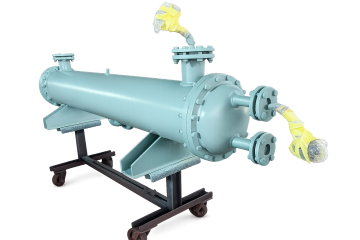
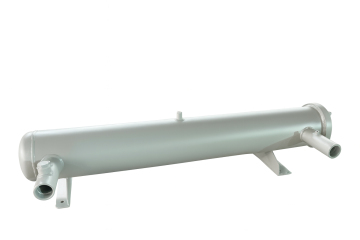
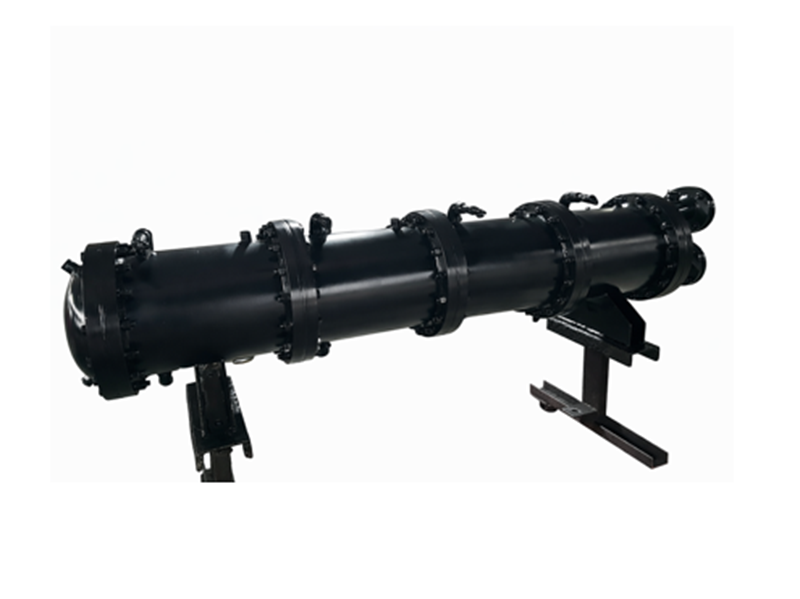
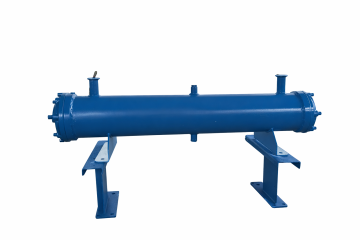
Our shell-and-tube water cooled condensers feature optimized tube bundle geometry, turbulence-enhancing inner surface treatments, and multi-pass flow configurations that maximize heat transfer coefficients — enabling stable condensing temperatures even under peak textile production loads.
Advanced copper and titanium tube options combined with precision-fitted tube sheets ensure minimal thermal resistance. The result is a condenser that maintains consistent refrigerant condensing pressure, translating directly to stable evaporator temperatures and rock-solid humidity control across the production floor.
Multi-circuit condenser designs allow textile facilities to independently control different production zones — spinning halls, weaving rooms, dyeing areas, and finishing lines — each with distinct temperature-humidity requirements, all managed through a single integrated refrigeration platform.
Textile manufacturing environments often involve chemical agents, dyes, and high-humidity atmospheres. Our condensers are available with stainless steel shells, titanium tubes, and epoxy-coated headers to withstand aggressive operating conditions and deliver decades of reliable service.
Integrated with variable-speed compressor systems and smart building management platforms, our water cooled condensers automatically adapt heat rejection capacity to match real-time production loads — eliminating energy waste during off-peak shifts while maintaining climate precision during full production runs.
Removable tube bundles, cleanable water-side surfaces, and accessible inspection ports minimize scheduled downtime. For textile mills operating 24/7, this means refrigeration maintenance can be performed without halting production — a critical operational advantage.
The intersection of sustainability mandates, digitalization, and evolving textile production techniques is rapidly transforming how water cooled condenser systems are designed, deployed, and managed.
The global phase-down of HFCs under the Kigali Amendment is accelerating adoption of low-GWP refrigerants such as R-32, R-454B, and natural refrigerants like ammonia (R-717) and CO₂ (R-744) in industrial textile cooling systems. Water cooled condensers are being re-engineered to handle the higher operating pressures and different thermodynamic profiles of these next-generation refrigerants, ensuring textile facilities can meet environmental compliance targets without sacrificing climate control performance.
Leading textile manufacturers are integrating IoT sensor arrays and AI analytics platforms with their water cooled refrigeration systems. Real-time monitoring of condenser approach temperatures, fouling factors, and refrigerant subcooling levels enables predictive maintenance scheduling — reducing unplanned downtime by up to 40% and extending equipment service life significantly beyond traditional maintenance intervals.
Modern textile facilities are increasingly capturing condenser heat rejection for process water heating, space heating, and drying applications. This waste heat recovery approach can offset 15–25% of a facility's total thermal energy demand, dramatically improving overall plant energy efficiency and reducing carbon footprint — a growing priority as ESG reporting becomes standard in global textile supply chains.
As textile manufacturers expand capacity in phases, modular water cooled condenser configurations allow refrigeration capacity to scale incrementally. Plug-and-play condenser modules with standardized connections reduce installation time, minimize capital expenditure per cooling ton, and provide operational redundancy — critical for facilities that cannot afford extended climate control outages during expansion projects.
Climate data from water cooled refrigeration systems is increasingly integrated into textile quality management systems. Temperature and humidity logs are linked to specific production batches, enabling manufacturers to trace quality deviations to environmental causes with precision — supporting both internal quality improvement initiatives and external customer audit requirements.
The combination of inverter-driven compressors with high-efficiency water cooled condensers is becoming the industry standard for new textile facility refrigeration installations. This pairing delivers part-load efficiency improvements of 30–45% compared to fixed-speed systems, making it the preferred choice for facilities seeking to reduce energy costs while maintaining the precise climate control that premium textile production demands.
Different stages of textile manufacturing impose unique climate demands. A comprehensive water cooled refrigeration system must address each zone's specific temperature, humidity, and air quality requirements simultaneously.
Natural and synthetic fiber blending requires controlled humidity (55–65% RH) to prevent static buildup and fiber clumping. Water cooled condenser systems provide the stable cooling capacity needed to maintain these conditions continuously, protecting fiber quality from the very first stage of production.
High-speed ring spinning and open-end spinning machines generate significant heat loads while demanding tight temperature control (22–26°C). Water cooled refrigeration delivers the consistent cooling capacity required to prevent yarn breakage rates from spiking — directly protecting production efficiency and yarn quality grades.
Loom efficiency and fabric integrity are highly sensitive to temperature-induced tension variations in warp and weft threads. Water cooled condenser systems maintain the narrow temperature bands (±1°C) that prevent tension fluctuations, reducing warp breaks and fabric defects that can account for significant production losses.
Dyeing facilities require precise temperature control of process water and ambient air to ensure color consistency across production batches. Shell-and-tube water cooled condensers with corrosion-resistant materials handle the chemically aggressive environments of dyeing departments while maintaining the thermal stability that dye uptake uniformity demands.
Fabric finishing processes including calendering, coating, and inspection require stable ambient conditions to ensure dimensional accuracy and surface quality. Water cooled refrigeration systems provide the reliable climate control that prevents thermal expansion artifacts in finished fabric rolls — critical for meeting tight dimensional tolerances in technical textile applications.
Finished textile storage requires controlled temperature and humidity to prevent mold, mildew, color fading, and dimensional changes. Water cooled refrigeration systems efficiently maintain storage climate conditions across large warehouse volumes, protecting inventory value and ensuring product quality is preserved through the entire supply chain.
Wuhan Qiaoxin Refrigeration Equipment Co., Ltd. was established in 2003 and is located in Wuhan, Hubei Province — China's major transportation hub connecting nine provinces. The company is a modern enterprise specializing in the research, design, manufacture, and sales of shell-and-tube condensers, evaporators, and other heat-exchange products. In terms of technology, Qiaoxin has consistently maintained a leading position in the domestic market.
Qiaoxin holds Class I and Class II Pressure Vessel Design Licenses and a Pressure Vessel Manufacturing License. The company is equipped with advanced production facilities, including CNC machining centers, CNC tube expanders, CNC cutting machines, and CO₂ flux-cored gas-shielded welding equipment, as well as a team of experienced professionals who have long been engaged in heat exchanger design and manufacturing. Through continuous research, development, and practical application, Qiaoxin has established a comprehensive management system that encompasses the entire process, from design and manufacturing to installation and commissioning, across a range of heat exchanger types and scales.

State-of-the-art production infrastructure ensuring the highest standards in water cooled condenser manufacturing for textile industry applications.


The company is capable of providing products for a wide range of operating conditions, featuring rigorous and innovative designs, meticulous workmanship, and the flexibility to meet diverse customer requirements. Qiaoxin has also passed the ISO 9001:2008 international quality management system certification, ensuring strict control over the entire process of product development, design, production, inspection, and after-sales service through an advanced quality management system.


Two decades of continuous innovation, trusted partnerships, and global expansion in refrigeration heat exchanger manufacturing.
"Quality First, Pursuit of Perfection" is the guiding principle of Qiaoxin's development. After years of growth, the company has earned widespread praise from customers at home and abroad for its outstanding product performance and efficient, responsive service. Its products are exported to Europe and the United States (PED certified), Southeast Asia, Africa, and throughout China, serving well-known domestic air-conditioning brands such as Midea, Chigo, Dunham-Bush, and TICA.
For textile manufacturers, Qiaoxin's water cooled condenser systems offer an unmatched combination of engineering precision, material durability, and application-specific customization — backed by two decades of industrial heat exchanger expertise and a global service network.
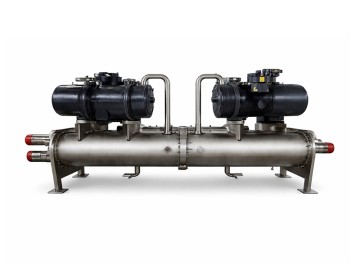
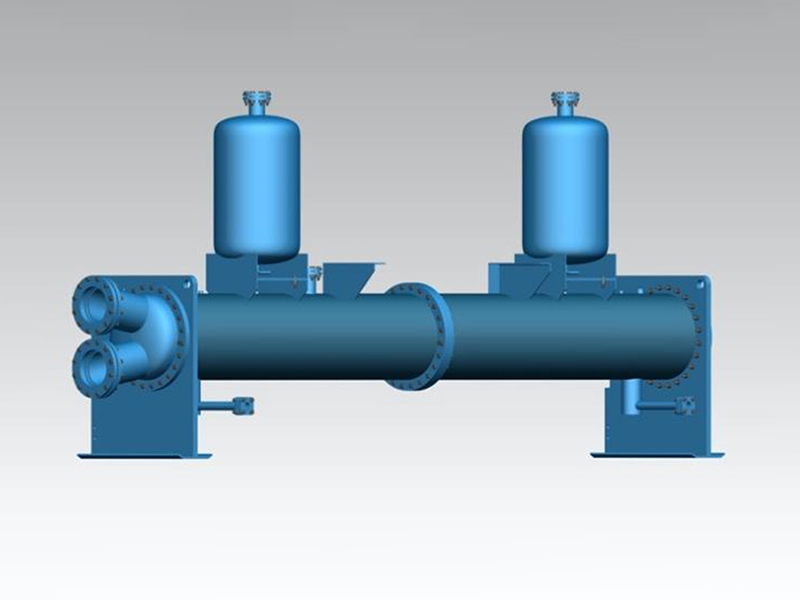
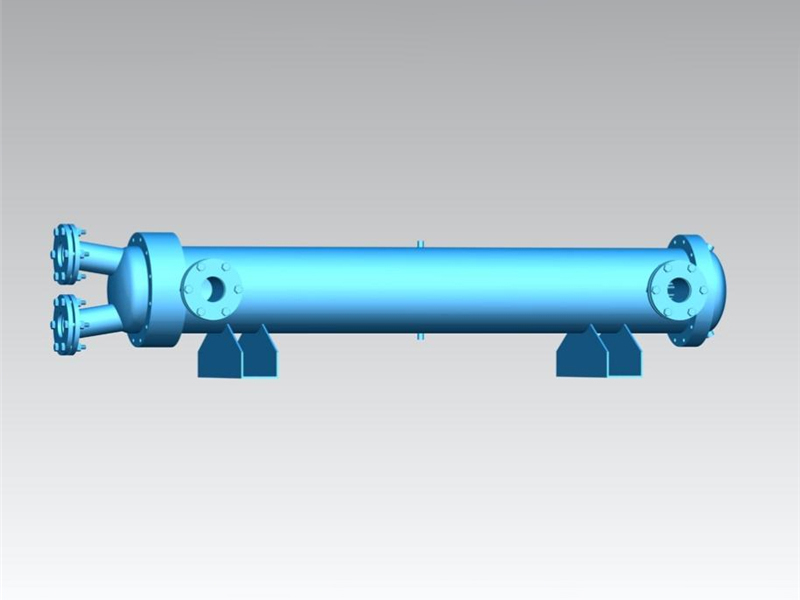
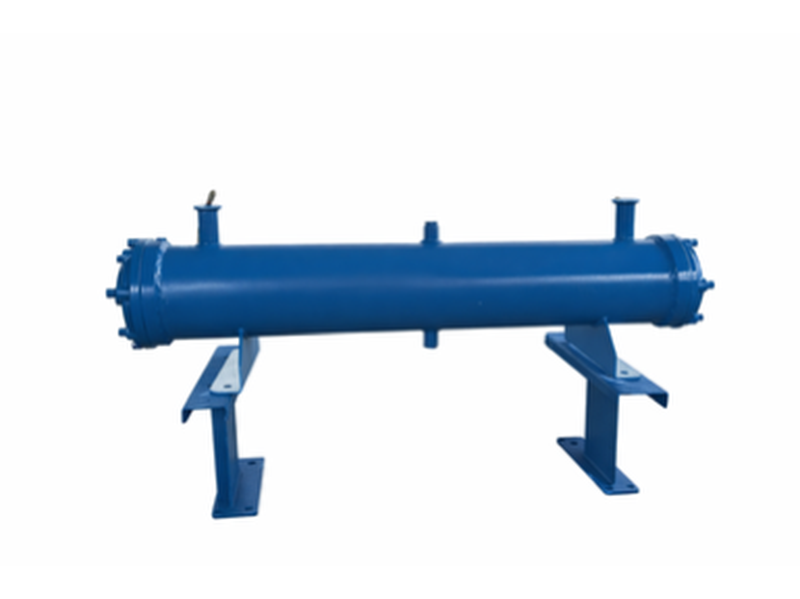
From condensers and evaporators to complete chiller assemblies and heat exchangers — Qiaoxin delivers every critical component your textile facility's refrigeration system requires.
Driven by a strong sense of mission toward the advancement of China's refrigeration industry, Qiaoxin is committed to applying cutting-edge refrigeration technologies to promote harmonious coexistence between humanity and nature. Looking ahead, the company will continue to follow a path of harmonious, healthy, and scientifically grounded development, upholding the philosophy that "character comes before products, and quality is the lifeblood of an enterprise." With dedication and enthusiasm, Qiaoxin strives to provide customers with high-value water cooled condenser solutions and reliable, efficient service — helping textile manufacturers worldwide achieve the climate stability that world-class production demands.
Contact Us Today